


Search
Follow UPGRADE

   Member of AWSA

  Info about AWSA


[See their Bios on the Partners Page by clicking on the Blogger box, above]

     PARTNERS:

Lina AbuJamra

Sue Badeau

Dianne Barker

Twila Belk

Dr. Michelle Bengtson

Gail Bones

Harriet Bouchillon

Mary Carver

Jeanne Cesena

Pamela Christian

Lisa Copen

Erin Davis

Diane Dean

Deb DeArmond

Kelly DeChant

Danna Demetre

Melissa Edgington

Debbi Eggleston

Pat Ennis

Morgan Farr

Pam Farrel

Sally Ferguson

Liz Cowen Furman

Gail Goolsby

Sheila Gregoire

Kate Hagen

Doreen Hanna

Holly Hanson

Becky Harling

Debbie Harris

Nali Hilderman

Cathy Horning

Kathy Howard

Mary James

Priscilla Jenson

Lane P. Jordan

Rebecca Jordan

Ellie Kay

Maria Keckler

Sylvia Lange

Debby Lennick

Peggy Leslie

Kathi Lipp

Kolleen Lucariello

Kathi Macias

Paula Marsteller

Melissa Mashburn

Dianne Matthews

Cindi McMenamin

Elaine W. Miller

Kathy Collard Miller

Lynn Mosher

Karen O'Connor

Yvonne Ortega

Arlene Pellicane

Ava Pennington

Laura Petherbridge

Gail Purath

Marcia Ramsland

Kaley Rhea

Rhonda Rhea

Vonda Rhodes

Cynthia Ruchti

Julie Sanders

Judy Scharfenberg

Deedra Scherm

Laurel Shaler

Joanie Shawhan

Stephanie Shott

Poppy Smith

Susan K. Stewart

Stacie Stoelting

Letitia "Tish" Suk

Jill Swanson

Janet Thompson

Janice Thompson

Teri Thompson

Brittany Van Ryn

Elizabeth Van Tassel

Leslie Vernick

Laurie Wallin

Julie Watson

Joan C. Webb

Shonda Savage Whitworth

Cherri Williamson

Kathy C. Willis

Debbie W. Wilson

Nancy DeMoss Wolgemuth

Jamie Wood

And UPGRADE'S Founder

   Dawn Wilson


Entries in Caregiving (5)

Thursday
Apr232020

Rx for Caregivers

Sally Ferguson always laces her writing with scripture truth. In this Caregiving UPGRADE, she helps us see how we can minister to caregivers who pour out their lives in service to others.

"Caregiving has come in multiple seasons for me," Sally said, "so it was an epiphany for me to realize the Good Samaritan was also a caregiver."
I (Dawn) had never thought of it that way. Sally is right. Also, the Lord told this story about the Good Samaritan some time after He sent out His followers to prepare the way for His arrival.

Jesus is the greatest Caregiver of all, and He wants us to follow His example of selfless service.

Sally continues…

Luke 10:30-35 tells the Good Samaritan’s story.

He acted as medic, transport and financier.

Parents can relate to this multitasker when we doctor up scrapes, become a taxi driver to endless sports and school activities, and provide for those events from the bank of Mom and Dad.

I’ve also been a caregiver when:

  • My Mom-in-love had double knee replacement.
  • I served as a Chemo Buddy through multiple friends' cancer treatments.
  • My Dad came to live with us.

Doctor appointments, physical therapy sessions, drug store runs, and sleepless nights all take a toll on the caregiver.

We serve out of compassion, but Xochitl Dixon says in Waiting for God, “Compassion can become exhausting when we try to do God’s job.”

At some point, the caregiver has to administer self-care.

We have to refill our cups in the Lord’s presence, so that out of the overflow we can again refresh others.

He invites us in Matthew 11:28 to come to Him for rest.

Psalm 68:19, 1 Peter 5:7 and Psalm 55:22 invite us to cast our cares on the Lord.

This practice is more than a “one and done” prayer; it is the process of releasing our burdens to be carried by another.

This act of letting go can look different from one person to the next.

  • Maybe worship music helps you?
  • Maybe taking your charge for a ride in the car?
  • Kneeling and stretching are postures of prayer, as are journaling, swimming, and doing dishes.

Find a way to gather your thoughts and hand them to the Lord.

What Would I like to Know as a Caregiver?

1. God cares.

In exhaustion, desperation and sorrow, it’s easy to think you’re alone in the battle. We start to entertain the “Why?” questions, and slide down the slippery slope of despair.

Years ago, my pastor said, “God knows and He cares” (Matthew 6:8). That assurance has given me strength to carry on through difficulty.

It reminds me I am not expected to do life in my own strength, and I have a heavenly Father who is invested in the details of my day-to-day experience.

2. Other people care.

Isolation is quite often the hallmark of a caregiver’s lifestyle. A mom with an infant yearns for adult conversation. Someone caring for a member of the family with dementia wishes for a day of recognition. A nurse is overwhelmed by suffering.

It’s hard to give and give without receiving care too.

Galatians 6:2 reminds us to share each other’s burdens.

Could you connect with a support group for your circumstance? From Alzheimer’s to MOPS (Mothers of Preschoolers) to zany viruses and everything in-between, there’s a support group to be found. Check online and in your community for reputable organizations.

A listening ear can lighten the load.

And, combat isolation by taking your charge for a walk, sitting on the patio in the sunshine, or going for an ice cream run. Look for something to celebrate, every day.

3. What I’m doing WILL make a difference.

Investing in a life is noteworthy, but often thankless.

The attention drawn to the sanctity of life is not only for the pre-born, but also affects how we treat our elderly and disabled. When we care for others, Jesus says we are showing Him how we care for Him (Matthew 25:34-40).

Whether you’re changing diapers and wiping drool for a 13 year old with special needs, or driving someone to chemo appointments, you need to know it matters.

You are needed, and no one can give the same level of care as you, because you are connected. You notice their smiles and celebrate their laughter. You administer grace in various forms.

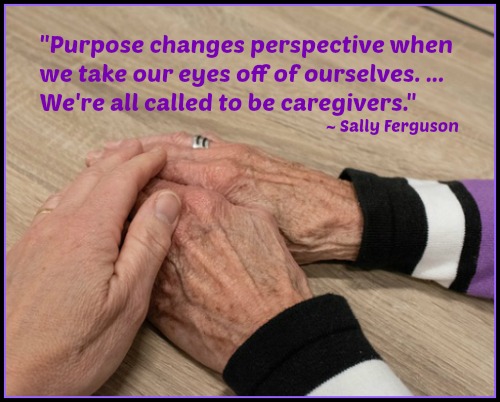
Purpose changes perspective when we take our eyes off of ourselves.

Cain was wrong when he said, “Am I my brother’s keeper?” We’re ALL called to be caregivers (John 21:16; 1 Peter 5:2).

The way we live out that role is important: we show our love for Jesus—by caring for His people (John 21:15-17).

Do you know a caregiver who needs a friend? What can you do this week to lift that caregiver's load or model the love of Jesus?

Sally Ferguson is a caregiver for her dad and her grands. She lives in western New York with her hubby of 33 years. Look for her words at EzineArticles, AlmostAnAuthor, on Amazon and at sallyferguson.netsallyferguson.net.
Graphic adapted, courtesy of Sabine Van Erp at Pixabay.

Tuesday
May222018

Upgrade Your 'Hope Rope'

My friend Pam Farrel always inspires me, because I know her responses to life are sifted through the grid of biblical truth. In this UPLIFT post, she speaks of the kind of hope only the Lord can give.  The ripple of my husband’s compassionate care of his parents impacted me as I tried my best to hold up our life and ministry as Bill held up his parents," Pam said. "We were both at the end of our proverbial rope."

As I (Dawn) have observed several friends and family members dealing with cargiving issues in recent months, I can attest to the kinds of stresses the Farrels are going through these days. But Pam's faith and hope point "true north" spiritually, as you will see in her story.

Pam continues . . .             

I was weary—tired to the bone, drop-dead fatigued, completely exhausted, “can’t take even one more step”, “leave it all on the field” beat.

It seemed we were caught in the perfect storm, and the ship of our life was being tossed about on a tumultuous sea of unending responsibilities.It was a year of up and down swells.

The positive included constant travel for our speaking, including large chunks of time spent internationally—which we love; but travel takes a physical and mental toll.

We also had multiple book projects in various stages, which are all wonderful blessings of opportunity—but these highs were also mixed with Bill having long absences from our ministry office as he drove back and forth through grueling Southern California gridlock traffic for months on end. He was commuting to care for his aging parents, one frail of mind, the other frail of body. 

His folks were fiercely desiring to maintain the independence of living in their own home—which put an ever-growing weight on the shoulders of my compassionate husband.

The Lord’s Life Line

I know that the Word has some prescriptions for handling weariness.

"Come to me, all you who are weary and burdened, and I will give you rest. Take my yoke upon you and learn from me, for I am gentle and humble in heart, and you will find rest for your souls. For my yoke is easy and my burden is light" (Matthew 11:28-30).

Yes, my soul, find rest in God; my hope comes from him (Psalms 62:5).

…“Come with me by yourselves to a quiet place and get some rest(Mark 6:31).

The LORD replied, “My Presence will go with you, and I will give you rest(Ex 33:14).

Six days do your work, but on the seventh day do not work (Ex 23:12).

I knew I needed a day off for rest, renewal, revival, rejuvenation—and recovery!

I am a part of a wonderful networking group called Professional Women’s Fellowship, and they were hosting a one-day retreat at a lovely private estate. I knew that I needed to get myself there (despite a looming book deadline).

I went begging God to speak to me and give me some HOPE!

I love this getaway because they minister to a person body, soul, mind and spirit. During the hour-long quiet time, I stretched out under the shade of a large tree near the pond. As I laid down on my stomach, spreading my journaling Bible open before me, I couldn’t help but notice that I was already seeing God be the Good Shepherd of Psalm 23.

He was making me lie down in a green “pasture” that was “beside still waters.” So, I continued to pray through Psalm 23:2-3:

Lord,  “refresh my soul….guide me along the right paths  for [Your] name’s sake.”  

Riggings of Rest and Recovery

I flipped opened my Bible to the Psalms, as I nearly always gain a measure of refreshing hope there. My Bible landed at Psalms 55:22:

Cast your cares on the LORD and he will sustain you; he will never let the righteous be shaken....”

Immediately, I thought,

“Wow Lord, that was fast! This seems the perfect verse for me, but exactly what does it mean to “cast my cares” on You? How can I get better at doing it? And what does it mean that you will “sustain” me? —because I REALLY need some sustaining power! I know that my heart’s desire is to be “righteous”, and right now living “unshaken” is what I need, because I can’t see the circumstances changing all that quickly. Lord, I am open to Your message to me from Your Word.”

I had a smartphone with me, so I connect to my Logos Bible software to help me dig a little deeper into the context, the word meaning and historical frame around this verse.

I prayed out my weariness, then looked up what it meant to “cast” my burden. I was to hurl my net out like a fisherman. God was inviting me to catapult my burdens on to his net. (And I was happy to hurl them!)

As I continued to study, what surprised me is the word used for "burden" can also be translated “assignment” or “gift”.

I remember thinking, “A gift? Really?” (It was interesting that this word “gift” can also be translated “lot” or “allotment”, and is the same word as many of us pray from The Prayer of Jabez in 1 Chronicles 4:10: “…Oh that you would bless me and enlarge my border…”  which means to pray the equivalent of “God bless me by giving me the full allotment You have planned for me”).

I was beginning to see how the “burden” was how I was seeing the “blessing” of the responsibility, or allotment God had for me.

It seemed to survive, I needed a paradigm shift to a more heavenly viewpoint.

But as I surveyed my “gift” (my assignment) from God, it seemed too big for one to ever carry alone, so I kept digging, doing more word studies through the verse.

I read that God would “sustain” me—He would nourish, strengthen, and support me—and make me sufficient enough to handle this assigned “gift.” 

To me, God was whispering hope to my soul. Whatever my assignment was depleting, God would pour back into me—and more!

I was washed over with peace, relief and rejuvenating hope.

As a praise response, and to lock this refreshing word picture securely and vividly in my mind, I sketched out two hands, representing God’s caring hands. In one palm was my “gift” of cares and I placed myself in the other palm.

Both me and my assignment—both you and your calling—are held up by the Good Shepherd. We are in His sustaining, caring hands. God’s got us!

As the strong hands of a lifeguard are a welcome sight to someone caught in a tempest at sea, so Psalm 55:22 is a snapshot of the rescue God’s hands can give YOU!

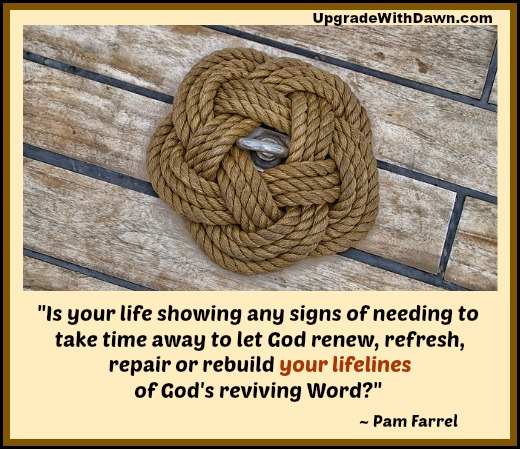
Boats need their riggings and lifelines repaired or replaced on a regular basis to keep a sailor safe. You can tell a line is losing strength if it shows signs of wear and tear, fraying at edges, or corrosion.

Is your life showing any signs of needing to take time away to let God renew, refresh, repair or rebuild your lifelines of God’s reviving Word?

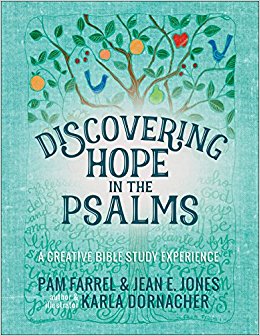
Pam Farrel is an international speaker, living on a boat in Southern California. When she is not kayaking to get her mail, she loves writing and teaching so others can find hope from God. Her newest book is Discovering Hope in the Psalms: A Creative Biblical Experience (by Pam Farrel, Jean E Jones, and Karla Dornacher, from Harvest House.) Learn more about Pam and her ministry at Love-Wise

Tuesday
May082018

Three Steps toward Dependence

I've long admired Kathy Howard for her skill in communicating biblical thruth through creative Bible studies, and recenty she tackled a topic that is hitting many people where they live. In this Caregiving UPGRADE, she provides a fresh perspective for weary caregivers.

"Self-reliance and independence hinder our caregiving," Kathy says.

Didn't I (Dawn) say it is a "fresh perspective"? I've read many posts promoting independence for caregivers, but never one on learning dependence.

Kathy continues . . .

Caring for my aging parents demands more than I have to give. I remember one night in particular.

Voices penetrated the heavy shroud of sleep. I could hear the anxiety in Mom and Dad’s conversation, but I couldn’t make out the words.

I threw back the covers and stumbled across the hall to their room. Dad lay on the floor beside the bed. I managed to get him sitting, but I could not get his 230-pounds off the floor and back in the bed.

My husband was stirring in the other room, so I called for help. Together we got Dad back in bed.

Thankfully, the fall only caused a few bumps and bruises. But it dramatically reminded me of my limitations.

My natural bent toward self-reliance is reinforced by a culture that admires this quality.

Our culture teaches us that independence is good and dependence is to be avoided at all costs.

While true in certain instances, self-reliance and independence can hinder believers. When we face circumstances and situations we cannot control, change, fix, or conquer we are thrown off balance.

What do we do when we simply can’t do it?

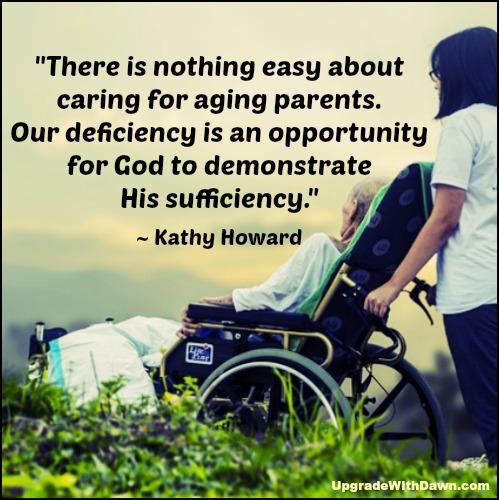
There is nothing easy about caring for aging parents.

No matter how much we love them, the task demands more than we have to give—physically, emotionally, spiritually and relationally. We need help from family members, friends, and health professionals.

But even that won’t always be enough.

Soak in this glorious truth for a moment: Our deficiency is an opportunity for God to demonstrate His sufficiency. Our dependence allows God to prove Himself dependable.

Within ourselves, we don’t have what it takes to tackle life’s hardest challenges, but God has more than we need.

A passage in 2 Corinthians beautifully shows us how Paul depended on God to carry him when he couldn’t go on. Paul had encountered a situation in Asia so desperate, he saw no way out of it with his life (2 Corinthians 1:8). Yet, miraculously God delivered him.

When the situation was hopeless, Hope flooded in. And Paul learned utter dependence on the One who is utterly dependable (2 Corinthians 1:9-10). 

The passage reveals that God allowed this situation to happen so that Paul and his companions would learn to rely on God (2 Corinthians 1:9).

And Paul continued to depend on God. When God chose to leave the “thorn” in his life, Paul learned the sufficiency of God’s grace. In his weakest moments, God’s power was revealed.

Paul’s weakness became a stage for God’s strength.

God also wants us to trust Him with all the circumstances of our lives—including caring for our aging parents. He longs to show us He is trustworthy, reliable and powerful. So, how can we let go of independence and learn to depend on Him?

Let’s follow Paul’s example toward dependence in 2 Corinthians.

1. Reflect on God’s past provision.

Think about all the times in your past when God has worked. Remember the times He has comforted you, encouraged you, delivered you from danger, given you clear direction for the path ahead.

Reflecting on God’s past provision and faithfulness will strengthen your future trust in Him.

2. Contemplate the scope of God’s power.

Meditate a few moments on our powerful, almighty God. The God who created the universe is not weak or powerless. He heals the sick, raises the dead, and holds the stars in place.

He can provide what you need for your daily life. Even the hardest days of caregiving.

3. Sit quietly in God’s gracious presence.

The same God who spoke the world into existence is the same God who delivered Paul. And He is the same God who longs to fill you with His grace and strength.

Linger with Him today. Ask Him to give you an awareness of His presence with you.

When we depend on Him, our caregiving role is a chance for God to demonstrate His strength in our lives. Paul expressed this truth:

"Three times I pleaded with the Lord to take it away from me. But he said to me, 'My grace is sufficient for you, for my power is made perfect in weakness.' Therefore I will boast all the more gladly about my weaknesses, so that Christ’s power may rest on me" (2 Corinthians 12:8-9).

Caring for our parents provides ample opportunity for God’s power to work in our weakness. For God to show Himself worthy of our dependence.

Depend on Him today.

What are some other ways you can purposefully work to foster dependence on God for caregiving today?

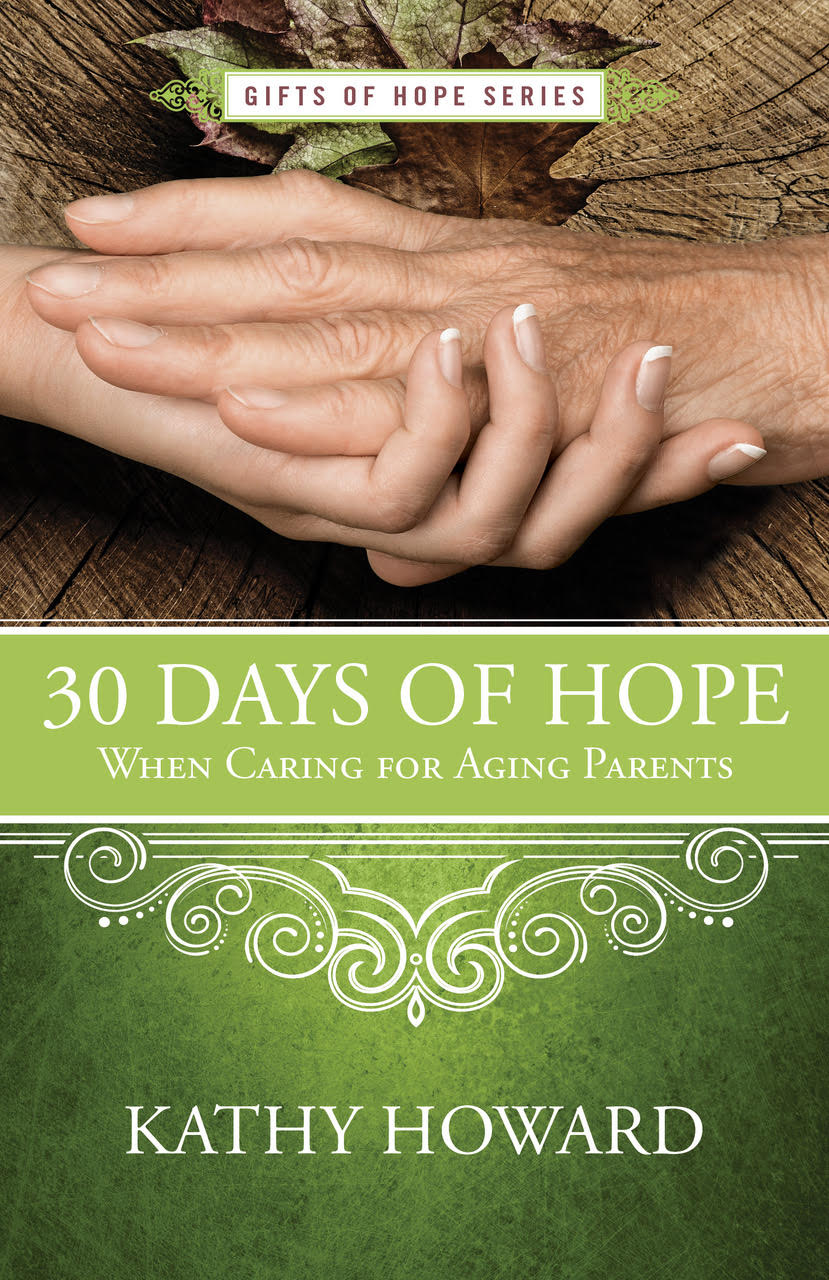
Kathy Howard, a Bible teacher and former “cultural Christian,” now lives an unshakeable faith for life and encourages other women to also embrace real, authentic faith. Kathy is author of 8 books, including “30 Days of Hope When Caring for Aging Parents” (May 2018). Get free discipleship helps on her website: www.KathyHoward.org.

Graphic adapted, courtesy of Unclelkt at Pixabay.

Thursday
Apr102014

Plan B = Beautiful

My author/speaker friend Judy Scharfenberg has a quick smile and wit, but I truly grew to admire her as I observed her role as caregiver. I asked her to share this personal testimony as an Upgrade Your Attitudes post, because she exemplifies so clearly the "how to" of Christlike service.

"The ER nurse looked at me and said, 'You'd better call your family. Your husband is not going to survive!"

With those words, Judy's life turned upside down. But the Lord has a way of turning things rightside up for His glory ... when we trust Him. And that's what happened to Judy at this turning point of her life.

She continues ...

In the middle of the night my dear husband had a massive stroke. It was my worst nightmare come true. I was scared to death and could only cry silently, “Lord, I’m so afraid. Is my husband going to die?”  

Well, that nurse was wrong. Richard survived, and even though his speech returned beautifully, he came home in a wheelchair, paralyzed on one side. He needed my help dressing, bathing, getting in and out of bed, cutting up his food, help into the car and many other things.

This is the way things were going to be. I was now a caregiver.

Life changed dramatically in the Scharfenberg household. I didn’t have the freedom I once had; my life was built around Richard. We couldn’t do some of the things we used to do and everything took twice as long. I didn’t just have to get myself ready, I had to help get Richard ready too.

I wondered if I could live like this for the rest of my life.

Don’t get me wrong, I wasn’t mad. I didn’t act ugly, but I was sad. I wanted my straight and tall husband taking care of me. I yearned for the days when he drove and I was the passenger. I wanted to take walks like we used to.  I wanted his arm around me at the movies and his help around the house.

I had to come to grips with this new life. It is not something either one of us chose, but it happened. 

A few years earlier I had memorized Romans 12. The first few verses rolled over and over in my mind: 

“I urge you therefore brethren, by the mercies of God to present your bodies a living and holy sacrifice which is your spiritual service of worship. Do not be conformed to this world, but be transformed by the renewing of your mind, that you may prove what the will of God is, that which is good and acceptable and perfect.”

I asked God to give me the strength, the joy, the peace that passes all understanding.

I truly wanted to serve my husband; I never wanted him to think he was a burden. 

It was a subtle change, and I can’t tell you when it happened, but one day I looked at this man and great joy rose up in my heart and I thanked God that he was alive and here with me. I thanked God that I could care for him and make his life easier. I thanked God that I could keep him clean, I could drive him places, I could read to him, I could make his favorite foods, I could literally lavish him with love and care.   

Oh, don’t get me wrong; we still had our disagreements just like everyone does. Richard came from stubborn German stock and I like control. Many times we butted heads over the way I did things. And then I would remember how confined he was.

I could encourage him or I could think about myself and make his life miserable. 

Former first lady Barbara Bush has a wonderful quote that I love.  She said, “You have two choices in life. You can either like it, or not. I chose to like it.”

I especially thanked God because I knew my feelings and my abilities are not normal. Only God could take this devastating experience and turn it around for His glory.

Our Plan B looked BEAUTIFUL.

God turned me into a giver instead of a taker. And you know, it really isn’t caregiving; it’s life-giving, for Richard and for me.

If you could see the future; if you knew your life would change overnight; what would you do differently today?

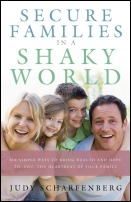
Judy Scharfenberg has a heart for women and families and has spoken at conferences, retreats and women’s events for more than 20 years. She was wife to Richard for more than 42 years—he passed on to heaven recently—and is the mom of six and proud grandma of 15. Judy will tell you she’s earned every strand of her gray hair. Her encouraging book, Secure Families in a Shaky World, was written for young wives and moms and older women who mentor younger women. Judy is currently working on a new book, Secure Marriages in a Shaky World. Visit Judy at www.judyscharfenberg.com.

Tuesday
Apr012014

Bricks into Cathedrals

Sue Badeau is an amazing, caring woman. She loves to give children roots and wings. She and her husband are the lifetime parents of twenty-two children (two by birth and twenty through adoption). She knows a lot about “care-giving,” and I invited her to share some insights with us.

“As a caregiver, when you feel like you’re running into brick walls,” Sue says, “you’re well on the way to supporting healing and wholeness for your loved one.”

I have to tell you, I [Dawn] wept when I read this post. My own sister was a caregiver for my grandmother, and now she cares for my mom. I can’t wait to share this precious post with her.

Sue continues …

Caregiving is hard and may feel like there’s no end in sight. Whether caring for a child, spouse, sibling or aging parent coping with physical or mental challenges, grief or trauma, we need a hopeful vision.

A folktale challenges us to reframe our perspective:

A person on a journey came upon workers laying bricks. She stopped, asking the first, “What are you doing?”

“I’m laying bricks,” the first worker replied.

Not satisfied, she asked a second worker, “What are you doing?”

“I’m building a great and strong brick wall.”

Still seeking to better understand, the wayfarer asked a third worker, “What are you doing?”

The third worker responded with enthusiasm, “I’m building a soaring cathedral to last throughout time, drawing men and women to the glory of God."*

Laying bricks is important work. Each contributes to the whole. But don't focus solely on bricks. Upgrade your perspective. Today’s caregiving tasks are bricks helping the person you love to achieve his or her life purpose with dignity. Can you envision the sturdy wall you are building with today’s bricks?

Now, upgrade again. Stretch your vision to extend beyond the wall until you see the soaring cathedral. Are you able to enthusiastically and purposefully undertake your role contributing bricks, one-by-one, to the cathedral—even if it takes years or decades to complete? 

Effective parents and caregivers must have a soaring vision and then work towards this vision on a daily basis. 

“Where there is no vision, the people perish” (Proverbs 29:18).

Here are four tips for upgrading your life by developing and implementing cathedral visions to sustain you through the brick-laying work of parenting and caregiving:

(1) Imagine the future. What are all the hopes and possibilities for the child or person you are caring for? Engage the person him or herself in describing their own “cathedral.” Dream big!

(2) Place a visual representation of your “cathedral” to be seen daily. Whenever you’re discouraged, it’ll remind you of the cathedral you’re building! 

For example, one of our daughters was told she’d never walk due to cerebral palsy. She longed to dance. Her vision of dancing was her hope for a future of self-expression and independence. We placed a music box with a ballerina on top on her dresser. It was a visual reminder of the reason we slogged through difficult physical therapy (brick-laying) exercises.

(3) Break the vision into smaller components. Just as a cathedral-builder’s blueprint will include the layout of all necessary walls (See I Kings 6-7), for our daughter, components included learning to feed and dress herself, walk and climb stairs. 

(4) Prepare to make adjustments. Our daughter’s love for dance was the inspiration she—and we—needed to lay bricks for her to become the person God created her to be.

Today she is able to dance, but she is not defined as a dancer. Her cathedral changed as it soared to new heights. She is an independent adult, raising two children. The dance vision wasn’t the full cathedral, but it gave us all the perspective we needed to keep at it day after day.

Who are you caring for, laying bricks each day? Can you upgrade this to a Cathedral vision? (How about your own life—are you building a Cathedral?) Sue (and Dawn) would love to hear about your caregiving experiences.

Sue Badeau is a nationally known speaker, author, child welfare and trauma expert. Sue and her husband, Hector, are lifetime parents of twenty-two children, two by birth and twenty adopted. They wrote the book Are We There Yet: The Ultimate Road Trip Adopting and Raising 22 Kids. Learn more about Sue at suebadeau.com and badeaufamily.com. 

* Cathedral story adapted, author unknown. Photo of the cathedral taken by Sue Badeau.