Member of AWSA

  Info about AWSA


[Bios on Partners Page]

PARTNERS:

Lina AbuJamra

Sue Badeau

Dianne Barker

Twila Belk

Gail Bones

Harriet Bouchillon

Mary Carver

Pamela Christian

Lisa Copen

Erin Davis

Diane Dean

Deb DeArmond

Kelly DeChant

Danna Demetre

Melissa Edgington

Debbi Eggleston

Pat Ennis

Morgan Farr

Pam Farrel

Liz Cowen Furman

Gail Goolsby

Sheila Gregoire

Doreen Hanna

Holly Hanson

Becky Harling

Debbie Harris

Nali Hilderman

Cathy Horning

Kathy Howard

Mary James

Priscilla Jenson

Lane P. Jordan

Rebecca Jordan

Ellie Kay

Maria Keckler

Sylvia Lange

Debby Lennick

Peggy Leslie

Kathi Lipp

Kolleen Lucariello

Kathi Macias

Paula Marsteller

Melissa Mashburn

Dianne Matthews

Cindi McMenamin

Elaine W. Miller

Kathy Collard Miller

Lynn Mosher

Karen O'Connor

Yvonne Ortega

Arlene Pellicane

Ava Pennington

Laura Petherbridge

Gail Purath

Marcia Ramsland

Kaley Rhea

Rhonda Rhea

Vonda Rhodes

Cynthia Ruchti

Julie Sanders

Judy Scharfenberg

Deedra Scherm

Laurel Shaler

Joanie Shawhan

Stephanie Shott

Poppy Smith

Susan K. Stewart

Stacie Stoelting

Jill Swanson

Janet Thompson

Janice Thompson

Teri Thompson

Brittany Van Ryn

Elizabeth Van Tassel

Leslie Vernick

Laurie Wallin

Julie Watson

Joan C. Webb

Cherri Williamson

Kathy C. Willis

Debbie W. Wilson

Nancy DeMoss Wolgemuth

Jamie Wood

   and Founder:

   Dawn Wilson


Entries in Biblical Thinking (53)

Tuesday
Jan102017

Survive Life's Firestorms (without Smelling Like Smoke)

Joanie Shawhan knows about life's firestorms. As a nurse, she's seen people shaken by their struggles, and she's also survived her own trials. In this helpful Spiritual Life UPGRADE, she shares crucial steps to survival.

“A firestorm blasted my world,” Joanie says. “I was diagnosed with ovarian cancer.”

I (Dawn) haven't had to face that—you likely haven't either—but there's no doubt you've gone through a personal firestorm, or you will. Let Joanie's words encourage you.

Joanie continues . . .

Firestorms—those unexpected, devastating losses that disrupt our lives. It may be the loss of a loved one, health, job, home or dream. The derailment may be temporary or have lasting effects.

How do we not only survive but also overcome these catastrophes?

During the ovarian cancer firestorm in my life, I discovered three steps to survival based on the fire safety principles of stop, drop and roll. But how do we rise out of the ashes without smelling like smoke? Hence the fourth step—rise.

1. STOP

When a firestorm erupts, our daily activities halt. All of our energy, strength and resources shift into crisis mode.

After an ultrasound for what I thought was a uterine fibroid, my doctor strode into the room and announced, “You have ovarian cancer.”

I froze. Surely this isn’t happening to me. Surgery and chemotherapy consumed me for the next six months. Cancer threatened my health, my job and my future.

When all I had was questions, I found I also needed to stop and listen to the One who had the answers.

2. DROP

Smoke rises in a fire so we drop to the ground. The air is fresher, our visibility clearer.

So too, in a life firestorm we drop to our knees in surrender and prayer, seeking God, humbling ourselves before Him. Our sacrifice of praise and worship mingles with our tears.

As I wrestled with the Lord about going through chemotherapy and sought His direction for my treatment, I sensed His voice whispering, “Go through the process.” The Holy Spirit strengthened me to endure the treatments—treatments which were worse than the cancer itself. I could not even focus to pray and read my Bible.

All I could do was drop into my Father’s arms like a child and cry for mercy.

3. ROLL

We roll to douse any lingering flames.

In a life firestorm, the flames of anger, bitterness and unforgiveness will cloud our vision and scorch our lives.

As we draw near to the Lord, we roll our cares onto Him: our pain, grief, anger, fears, doubts, loss and loved ones.

We stretch forth our hands, grasping for a reason. “Why? Why? Why?” But the answers slip through our fingers like a vapor.

I don’t know why I got ovarian cancer, the rarest and most deadly of female cancers. But I needed to allow my desire for answers to be extinguished with the flames.

4. RISE

God desires not only to raise us up out of the ashes of our brokenness, but also give us beauty for the ashes (Isaiah 61:1-3).

Through thanksgiving and praise, we shake off the ashes and exchange the lingering smell of smoke for the fragrance of Christ.

We recognize that all we are comes from Him. We reflect His glory.

I lost myself to ovarian cancer, but in losing myself, I found a new purpose and calling in my life—to write encouraging articles for women undergoing chemotherapy and advocate for and educate women regarding ovarian cancer.

Because of God’s power we are able to come through the firestorms in our lives without smelling like smoke.

But surviving a firestorm does not imply that everything is “all better” and the wound is healed.

Some heartbreaks and losses permanently char us.

True triumph is not a return to life before the firestorm, but a heart attitude—is God still God despite my pain and loss?

If so, then we will be able to proclaim, along with Job, I know that my redeemer lives” (Job 19:25 NKJV).

How has God brought you through the firestorms in your life?

Joanie Shawhan is an ovarian cancer survivor and a registered nurse. She writes encouraging articles for women undergoing chemotherapy. Joanie also speaks to medical students in the Survivors Teaching Students program. Visit her website.

Graphic adapted, courtesty of ZoranD at Pixabay.

Tuesday
Sep272016

5 Ways to Hope When Life Hurts

Lina Abujamra is a pediatric ER doctor and she's seen a lot of "hurts" in life, but in this Attitude UPGRADE, she offers practical counsel for hope through the tears.

"Wouldn't it be nice if we could take a pill to make the pain go away? But things are never that simple," Lina says. "Some days feel like torture, and it hurts."

Oh, yes, I (Dawn) have looked for that magical bottle of pills; but Lina says there is real hope—we just have to know where to find it. (This article is longer than the usual UPGRADE posts, but I think this is a message so many of us need to hear today.)

Lina continues . . .

Motivational speakers try to teach us to use positivity to overcome our pain. But I've found myself in places in my life where no amount of positive mental thinking will work me out of my pit of despair.

Hope is more than a positive mental attitude. God has given us far more than positivity. He's given us His Son who demonstrated victory by rising from the dead. He's given us His Spirit to enable us to live out the Christian life the way He lived out His: victoriously and triumphantly.

Yet so many of us are failing. I'm embarrassed to tell you how often I've crumbled under the pressure of pain. This crumbling reveals itself in a variety of shapes and forms of my life: misplaced anger, inpatient frustration, whining and complaining, and once in a while, the pit of self-pity and even a few potholes of despair.

But this is not the end of the story.

It was a seven-mile walk from Jerusalem to Emmaus, and on that day the walk felt like an interminable journey of sorrow. (Read Luke 24:13-27).  The two disciples were weighed down by their pain. They had expected God to do the impossible. They had expected the Messiah to take over the world.

Suddenly a man came walking up alongside them. The man was Jesus risen from the dead, but the disciples had not been given the ability to recognize him yet.

They told Him what they were talking about: "Jesus of Nazareth, a man who was a prophet mighty in deed and word before God and all the people, and how our chief priests and rulers delivered him up to be condemned to death, and crucified him" (vv. 19-20).

But the worst was yet to come. The disciples then uttered three fatal words of defeat that were the nail on the coffin of their pain: "But we had hoped that he was the one to redeem Israel" (verse 21).

We. Had. Hoped.

Have you ever uttered these three words of hopelessness, not knowing that victory was already on the way? Have you ever misinterpreted the most painful event in your life without any idea of the miracle God was already working out on your behalf?

I can't keep track of the times that I've given up on God and twisted things around in my head and assumed that my pain was final, that I'd been defeated, while all along God was walking right next to me, preparing the victory for me. You too?

The disciples on the road to Emmaus had put a period were God had put a comma.

They had written off the Lord when God hadn't even started yet. They had sunk into despair when hope was on the way.

It's easy to talk about the life that is unshaken when everything is going well.

People flocked to Jesus when he fed the 5000 and cure diseases. It was at the cross that everyone fled. That's what pain will do. It tests our mettle. It crystallizes what we really believe.

Anyone can boast in the Lord when their dreams have come true and their prayers have been answered. The challenge is to stand strong when life is hard, to hope when hope looks dead.

There are four things I know for sure:

  • Pain exist.
  • Pain has a cause.
  • Pain can be treated but it's far better to treat its cause.
  • Pain doesn't have to define you.

We can talk about the resurrection until we're blue in the face, but the way to show if we really believe it is by watching how we respond to the pain in our lives. When it comes to using the pain in your life as fuel for godliness, here are a few tools you can use for victorious living.

Five Painkillers You Can Use:

1. Lighten Up on the Clichés.

Clichés are nothing more than old-fashioned tweets. Pithy quotes might motivate us for a minute, but their effect is short-lived. What we need is life change.

What I long for is the transformed, powerful life that Christ promised us. We need upside-down, inside-out radical living that no litany of clichés will produce, but is rightfully ours in Christ Jesus by faith. The more of God's Word that we hide in our hearts, the more it will give us strength when we need it the most.

2. Let Go of the Blame Game.

When a kid comes into the ER with a cut, families get caught up in how it happened and whose fault it was. The truth is that it doesn't matter who did what. There's a cut, and it hurts, and it must be fixed.

When Adam and Eve sinned, Adam blamed Eve and Eve blamed the serpent, but the fact remains that all of us humans are still suffering because of today. Instead of blaming each other, Adam and Eve should've acknowledged the wrong and accepted God's mercy, then adapted to their new normal outside of Eden.

When Job went through his painful trials, his wife begged him to blame God and his friends blamed him for his own problems. Unlike Adam and Eve, Job was innocent and had done nothing to deserve his pain, yet the blame game was just as much a part of Job story as it was for our first parents.

Blaming someone else for pain is natural and gives us a temporary sense of control. It might even help us come up with an explanation for the pain. But it doesn't work.

What works far better than the blame game is recognizing God's sovereign control over our lives.

It's understanding that God didn't find Adam and Eve in the garden to shame them but rather to cover them. It's accepting Christ forgiveness for sin. It's extending that same forgiveness to those who seem to be the cause of her pain.

3. Get Off the Self-pity Train.

Self-pity is defined as a self-indulgent attitude concerning our hardships. The problem with self-pity is that it believes it has been wronged. It's an attitude that dislocates the Christian from a sovereign God Who is behind every detail and circumstance.

Charles Spurgeon once said, "God is too good to be unkind. He is too wise to be confused. If I cannot trace His hand, I can always trust his heart."

The biggest lie that Satan will throw your way is the God doesn't care about you anymore, and self-pity slowly feeds that lie. God does care about you (1 Peter 5:7). The self-pity train can kill you if you don't guard against its lies with the truth of God's Word. It's time you jump off that train and run toward grace.

4. Bury Your Past at the Cross.

Paul killed Christians before he became a Christ-follower. Yet God used Paul to write the bulk of the New Testament and to build the church. How did Paul deal with his past? His solution was to bury his past at the foot of the cross (Philippians 3:13-14).

It's time to get rid of the Rolodex of sin. Failure is the best teacher you'll ever find. Learn from it, then let it go.

Your past might be part of who you are, but it has no power over you. Use it to rejoice in God's mercy and grace and move onward and upward. Use it as your platform to highlight God's love and grace and watch God use your past to change your world like He did with the apostle Paul!

5. Leave Your Fears to God.

Pain and fear are often inseparable. What is it that you are afraid of? God's plan isn't to hurt you through your pain but to shape you through it (Proverbs 25:4).

Like a perfect Potter, He works and reworks the clay until it seems good to Him (Jeremiah 18:4). He molds the clay until reflects the beauty He is after.

This process is called sanctification. It's God's work in you through your pain to make you more Christlike. It's a work God started the moment you gave your life to Him and is committed to complete when you finally see Jesus face-to-face.

There comes a time in your life when nothing will do but God Himself—when only the Lord can make sense out of your pain and confusion. Only He can rescue you. Only He understands the depth of your pain.

When the disciples on the road to Emmaus had lost hope, Jesus rebuked them (Luke 24:25-26). Life is never as hopeless as we make it out to be. We are never as alone as we feel. Things are never as unclear as we think.

If we look at the facts too long without a measure of faith, we will sink into despair, and the only way to build our faith is through the living Word of God. When you look at the painful facts in your life to the lens of God's promises, you will find hope for the future.

Few things will change our world like our resolve to hope when it hurts too much. Few things will radically transform our world like our resolve to believe God when everything screams against Him.

Hope has a way of showing up when we're not looking for it. When it does, anything can happen.

Which of these "painkillers" could increase your hope today?

Lina AbuJamra is a Pediatric ER doctor, author, and speaker. Her passion is to apply her life-saving, decision-making, and hope-giving skills from the Emergency Room to rescue and recover people from spiritually deadly situations. She has written three books: Thrive: The Single Life as God IntendedStripped: When God’s Call Turns from Yes to Why Me?; and Resolved: 10 Ways to Stand Strong and live What You Believe. You can connect with her daily at livingwithpower.org.

This post was adapted from Chapter 9 in Lina’s book, Resolved: 10 Ways to Stand Strong and Live What You Believe (Baker Books, 2016).     

Tuesday
Sep202016

Struggling? 5 Things God Won't Say to You

Cindi McMenamin has tremendous insight into women's needs and struggles, and she writes to encourage and strengthen them. In this Relationship with God UPGRADE, Cindi writes about what God will never say to the hurting, confused or frustrated heart.

She asks, "Are you struggling right now? Wanting to hear from God? Hoping that when you finally do, it will be something encouraging?"

As a matter of fact, as I (Dawn) received Cindi's article, I was hoping for that. I was eager for an answer "right now"—but God nudged me to pause and think biblically. That's exactly what Cindi is helping us do here.

Cindi continues . . .

There are a few situations in my life right now that could really stress me out. My husband is waiting to hear about three different job opportunities, and to be honest, he needs at least two of the three!

Now, I can pull out my hair, and lose sleep at night, and keep calculating what we'll do if he doesn't get any of those jobs. Or, I can realize it is ludicrous for me to worry that God isn't aware, or doesn't care, or won't provide for us in time.

I choose to not be ludicrous.

So I thought of five good reasons not to worry about that or anything we tend to worry about. Those five good reasons come down to five things you and I will never hear God say as we hand Him our worries and concerns.

So here they are. You never have to fear any of these responses when you trust God with what is on your heart.

1. You've got this yourself.

Instead of putting it back on us, God tells us in Exodus 14:14: "I will fight for you; you need only to be still."

2. I really don't want to hear about it.

To the contrary, God wants a relationship with us in which we tell Him all that is on our hearts and minds. Not because He doesn't know, but because He wants the intimacy that develops as we share our hearts with Him. Intimacy is developed through communication.

We are told in Psalm 62:8, "Trust in Him at all times...pour out your heart before Him; God is a refuge for us."

3. You don't need Me. 

Even if we think God has abandoned us because we've acted independently before, God knows better than we do how very much we DO need Him.

In Philippians 4:13, we are told we we can do all things through Christ who strengthens us. The key is Christ's strength.

So don't worry about Him thinking you don't need Him.

Even when you THINK you don't, you really do.

4. Sorry, it's impossible.

Jesus, Himself, said in Matthew 19:26: "With God all things are possible."

5. I don't want to do anything for you.

Sometimes we don't tell God what worries us, or even ask for something, because we fear He doesn't want to give us anything.

If you're a parent you know how far from the truth that is.

Jesus said in Matthew 7:11: "If you then, being evil, know how to give good gifts to your children, how much more will your Father who is in heaven give what is good to those who ask Him!"

There you have it.

Does God care? Oh yes.

Can He handle it? You bet.

Give to Him all that is worrying you today and experience the wonder of His peace.

What is it that you are struggling with alone that God is waiting to help you with?  

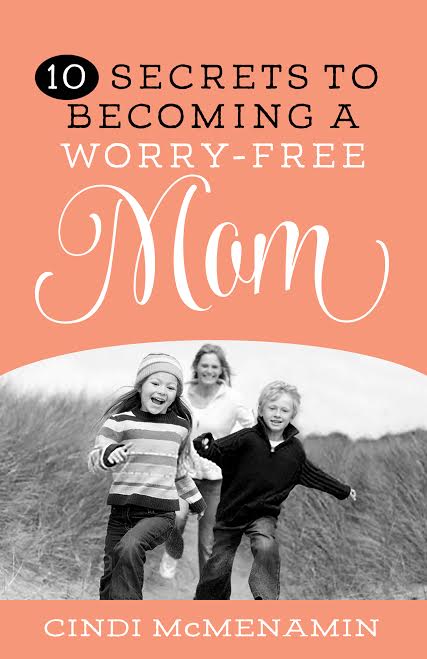
Cindi McMenamin is a national speaker and author of 15 books including When God Sees Your Tears, and her most recent, 10 Secrets to Becoming a Worry-Free Mom.  For more on her books and ministry, or to download free resources to strengthen your walk with God, your marriage, or your parenting, see her website, Strength for the Soul. 

Tuesday
Sep132016

Trusting the Trustworthy God

Rhonda Rhea is just plain funny. Until she's not (on purpose). Rhonda's spiritual depth always amazes me, like when she's sharing about the character of God and how we relate to Him, as in this Spiritual Life UPGRADE.

"Sometimes people agree with me without even thinking it through," Rhonda says. "Of course, let’s face it, that shouldn’t happen all that often. Still, when something happens only occasionally, it makes every occurrence that much sweeter."

Have you ever had anyone trust you that much? I (Dawn) have, and I can testify how sweet that is!

Rhonda continues . . .

When someone agrees before even fully knowing what I’ve said, it makes me feel like I’m sort of the “terms and conditions” of people. Oh, the power.

Basically I’m letting you all know that you can trust me. At least part of the time. I’ll be honest and tell you that you still wouldn’t want to leave me alone in a room with your nachos.

But other than that, trust.

The trustworthiness of a promise always depends on the nature of and the power held by the one making that promise.

Let’s get real, once someone adds a layer of melty cheese, if you trusted me, I would question your trust-judgment. But our God? The very essence of who He is in nature is flawlessness. The power He holds can’t be compared to anything or anyone else. He has it all.

Paul said in Hebrews 10:22, “Let us draw near with a true heart in full assurance of faith, with our hearts sprinkled clean from an evil conscience and our bodies washed with pure water” (ESV). So Paul is talking to us as believers here when he says in the next sentence, “Let us hold fast the confession of our hope without wavering, for he who promised is faithful” (vs. 23).

It makes sense to have faith in the One who is faithful.

It makes sense to trust in the One who is trustworthy. His record is clear. He has never failed to deliver on a promise. Never.

God’s Word is filled, cover to cover, with one blessed occurrence after another of promises kept.

We have His nature as the basis for our trust in Him. We have His power, knowing He is fully capable of carrying out His promises. And if that’s not enough—which it certainly is, but still—we have His love for us to top it all off.

You can trust the One who loves you without limits, without reserve. “But God, being rich in mercy, because of the great love with which he loved us, even when we were dead in our trespasses, made us alive with Christ—by grace you have been saved” (Ephesians 2:4-5 ESV).

Our Lord loved us all the way to the cross. His love is perfect. And that leads us to trust Him without the slightest apprehension. Our faith is well-placed. “But You, Lord, are a compassionate and gracious God, slow to anger and rich in faithful love and truth” (Psalm 86:15, HCSB).

David wrote also in Psalm 143:8, “Let me experience Your faithful love in the morning, for I trust in You” (HCSB).

Love leads to trust. And trust leads to love. That is perfect!

Anytime you encounter a challenge, difficulty, doubt or question, it changes how you see that struggle when you remember that Your Father is trustworthy. Not part of the time. All. In every room. He is perfect, He is powerful and He loves you with a lavish love.

Those are His terms. Those are His conditions. Oh, the power!

What encourages you to trust God the most: His nature, power or love? Can you thank Him today for being your trustworthy God?

Rhonda Rhea is a humor columnist, radio personality, speaker and author of 10 books, including How Many Lightbulbs Does It Take to Change a Person?, Espresso Your Faith - 30 Shots of God's Word to Wake You Up, and a book designed to encourage Pastor's Wives (P-Dubs): Join the Insanity. Her new book, Turtles in the Road—coauthored with her daughter Kaley (another UPGRADE blogger)—is releasing soon. Rhonda, a sunny pastor's wife, lives near St. Louis and is "Mom" to five grown children. Find out more at www.RhondaRhea.com.

Thursday
Sep012016

Why Do I Do What I Do Wrong?

Kathy Collard Miller is an author and speaker who encourages women to apply practical principles from the Word of God. In this Attitude UPGRADE, she explores some ways to find the underlying causes of destructive responses.

We’ve all said things like, “He makes me feel…” or “I feel bad when she does that.” But the truth is we are responsible for our own choices," Kathy says. "Putting that into practice can actually diminish unwise choices."

I (Dawn) think that is fascinating because so many people think they can grit their teeth and swear to never respond hurtfully again. I've done this—haven't you? Kathy's insights help us consider the "why" behind our responses.

She continues . . .

It’s easy to blame a person or circumstance for the way we’re acting, but the truth is our wrong reactions have a long history.

It’s true for all of us. We see the pain we cause others or even ourselves, and it seems like we should just grab God’s power and never do it again. But there are reasons for our continuing ungodly choices.

Heres how to discover and correct the underlying causes.

 1. Look to the past to see the beginning.

When painful things happen to us as children, we blame ourselves. We “hear” a message that somehow “I’m the cause. I must be hopeless, unloveable, incapable," etc.

When I was molested as an eight-year-old, I felt like a shameful little girl who should have prevented it from happening:

“I better act perfectly to hide my dirtiness.”

Of course those were lies, but I believed them.

Anytime someone implied I should do a better job at something, I became angry— blaming them; I didn’t want to be exposed as imperfect.

As an adult, by seeing the lies I was believing, I replaced it with God’s truth:

I wasn’t responsible for the abuse, and God loves me even though I’m imperfect.

Author Mike Wilkerson writes,It’s not our raw experiences that determine our lives but the meaning we make of them—the stories we tell and the stories we believe.”

2. Look to the present to see the threat.

Every time we react sinfully (anger, contempt, procrastination, passive/aggressive, etc.) we feel like someone or something is threatening our good self-image, our comfort, our finances—anything we value.

Many times what we value become “idols.” We “worship” those rather than looking to God to define, comfort, or provide for us.

James wrote, “Instead you ought to say, ‘If the Lord wills, we will live and do this or that.’ As it is you boast in your arrogance. All such boasting is evil” (4:15-16).

The most difficult thing is surrendering to however God allows people to treat us or circumstances to assail us.

That doesn’t mean we never share our opinions or take action. But instead of automatically reacting, we must seek God first. Just because it seems “natural” to respond our usual way, we may not be reacting “supernaturally” in God’s power. Blaming, worry, defensiveness and other ungodly reactions seem to protect us but don’t bring glory to God or fulfill His will.

3. Look to God’s perspective of the person or situation.

When we overreact, we take other people’s actions personally. We feel like were back to being blamed, labeled or attacked like we were as children.

But most of the time, that person is just trying to protect themselves. It’s not about us, it’s about their insecurity or lack of trust in God.

And any difficult circumstances is God’s gift of transforming us, not to destroy us. Instead of fighting off the “threat,” we can look through God’s eyes of love and grace.

One perspective is to have “godly sorrow.” Godly sorrow sees another person’s attack as hurting them, not us.

The Apostle Paul wrote, “I am speaking the truth in Christ—I am not lying; my conscience bears me witness in the Holy Spirit—that I have great sorrow and unceasing anguish in my heart. For I could wish that I myself were accursed and cut off from Christ for the sake of my brothers, my kinsmen according to the flesh.” (Romans 9:1-3 ESV).

Can you imagine that kind of surrender?

Paul didn’t take their attacks personally; he wanted the best for them.

God can empower us to have that kind of reaction. We can be gracious as we speak the truth in love.

Which of those three insights would you like to concentrate on so that your “natural” reactions can turn into “supernatural” reactions?

Kathy Collard Miller loves to help women trust God more through her 50 books and her speaking in over 30 states and 8 foreign countries. Visit her website/blog and discover more about her speaking ministry here. Kathy has authored many magazine articles and more than 50 books, including Partly Cloudy with Scattered Worries and her newest book Choices of the Heart, a Bible study, available here. The insights in this blog are based on her book Never Ever Be the Same: A New You Starts Today found here.

Graphic: courtesy of PourquoiPas, Pixabay.