




Member of AWSA

  Info about AWSA


[Bios on Partners Page]

PARTNERS:

Lina AbuJamra

Sue Badeau

Dianne Barker

Twila Belk

Gail Bones

Harriet Bouchillon

Mary Carver

Pamela Christian

Lisa Copen

Erin Davis

Diane Dean

Deb DeArmond

Kelly DeChant

Danna Demetre

Melissa Edgington

Debbi Eggleston

Pat Ennis

Morgan Farr

Pam Farrel

Liz Cowen Furman

Gail Goolsby

Sheila Gregoire

Doreen Hanna

Holly Hanson

Becky Harling

Debbie Harris

Nali Hilderman

Cathy Horning

Kathy Howard

Mary James

Priscilla Jenson

Lane P. Jordan

Rebecca Jordan

Ellie Kay

Maria Keckler

Sylvia Lange

Debby Lennick

Peggy Leslie

Kathi Lipp

Kolleen Lucariello

Kathi Macias

Paula Marsteller

Melissa Mashburn

Dianne Matthews

Cindi McMenamin

Elaine W. Miller

Kathy Collard Miller

Lynn Mosher

Karen O'Connor

Yvonne Ortega

Arlene Pellicane

Ava Pennington

Laura Petherbridge

Gail Purath

Marcia Ramsland

Kaley Rhea

Rhonda Rhea

Vonda Rhodes

Cynthia Ruchti

Julie Sanders

Judy Scharfenberg

Deedra Scherm

Laurel Shaler

Joanie Shawhan

Stephanie Shott

Poppy Smith

Susan K. Stewart

Stacie Stoelting

Jill Swanson

Janet Thompson

Janice Thompson

Teri Thompson

Brittany Van Ryn

Elizabeth Van Tassel

Leslie Vernick

Laurie Wallin

Julie Watson

Joan C. Webb

Cherri Williamson

Kathy C. Willis

Debbie W. Wilson

Nancy DeMoss Wolgemuth

Jamie Wood

   and Founder:

   Dawn Wilson


Entries in Character (5)

Tuesday
Oct182016

Equipping Our Next Generation's Women of Influence

Doreen Hanna loves little girls—and it shows. One of her passions is developing Christ-like character in their hearts. In this Parenting/Legacy UPGRADE, she describes some everyday ways to create a woman of influence.

Doreen says, "Moms, dads & some grandparents today are seeking to discover resources that will develop and strengthen Christ-like character qualities within the heart of their little girls—knowing they will be our next generation’s mothers, professional women in leadership, and women in ministry leaders!"

I (Dawn) wonder how often parents and grandparents think about the impact they are making on the next generation as they train and encourage little girls. I know I thought about "leadership" and "character" with my sons, and that's every bit as important with girls.

Doreen continues . . .

Developing Christ-like character in the heart of our little girls sometimes seems like an unending parenting project. I found that to be true when I was raising my two girls.

Just about the time I thought that we had achieved success in the development of telling the truth, I quickly found we then needed to work on tattling. Why?

Focusing on one character quality often exposes the lack of another. 

I believe that is God’s grace, because He does promise He would never give us more than we (parents) can bear. I read a great quote recently that has Biblical truth:

“Change in behavior begins with a change in heart.” 

“Above all else," Proverbs 4:23 says, "guard your heart, for everything you do (your behavior) flows from it.”

Here are a few suggestions to help encourage Christ-likeness in your little princess. She will one day grace society as a lovely Daughter of the King—a woman of influence, both in word and deed.

1. Model what you are seeking to develop in your daughter’s heart.

If you plan to focus on growing gentleness, look for opportunities where you can demonstrate it. 

Perhaps you are walking by neighbors' yard and their flowers are in full bloom. Take a moment to stop and admire them, gently touching one of them. Then encourage your daughter to do the same, affirming that flowers need to be touched gently. 

Or, maybe you have the opportunity visit a friend and see her new puppies. As you hold one of the pups stroking it gently, allow her to feel its soft fur and hear its precious little whimper. Then allow her to hold it gently. Affirm her sweet act of gentleness.

2. Talk about ways you could show kindness to others, together. 

With the Thanksgiving season approaching, how about taking a walk around the neighborhood and choosing homes where you would like to place a handwritten note at their door along with homemade cookies or a gift card.

The card might say, “During this Thanksgiving season, we’d like to say how grateful we are that you are our neighbors. Love from..." (add your daughter’s name and your family name).

And speaking of love...

3. Think of ways you can teach your daughter to demonstrate love to others.

A warm hug certainly affirms our love for others. It is good for our children to see their mom and dad expressing their love to each other by way of a wink of the eye, an extra squeeze, or a great kiss. 

That was a delight for me as a little girl. My dad never left our home without kissing my mom good-bye, or returning home and immediately giving her an “I’m home” kiss. I felt so secure, I didn’t even need a kiss from him. His kiss for her was enough, most often!  

Serving is another simple yet profound way to show love. Instead or you doing one of your routine acts of love for your husband, encourage your daughter to bring dad his favorite drink, as he sits down in his favorite chair after a long day at work.

Or if grandparents are living at home with you, help your daughter look for an opportunity to serve the elderly with sincerity. She might observe them quietly, and if they have forgotten something, your daughter  could quickly meet their need. Perhaps she could get their glasses left in another room, or a pair of slippers that would require several steps to the closet for them, while she could run and get them in an instant! 

Acts of love fill both the giver and the receiving with a moment of joy!

These are only three character qualities you could teach and model for your daughter to equip her to be a woman of influence.

Are you praying for ways to guide your little girl’s behavior? Are you trusting God to change her heart, to ultimately grow her into a lovely woman of influencea Daughter of the King?

Doreen Hanna is the Founder and President of Modern Day Princess Headquarters. Speaking and writing, she has empowered women and equipped their daughters for more than 35 years. Doreen enjoys her two daughters, four grandchildren and 88-year-old mother, presently living with her.  Traveling and visiting with friends over a cup of coffee are Doreen's favorite past-times. For more information about Modern Day Princess, visit here.

Graphic adapted, courtesy of Giuliamar for Pixabay.

Tuesday
Sep062016

Kinda Kind

Kaley Faith Rhea is a bright young woman with a promising future, and her growth in wisdom shows! In this Spiritual Growth UPGRADE, she zeroes in on the need for intentional kindness.

"We tend, Kaley says, "to try to teach our children to be kind—to share and to say sweet words and to play nice, right? But between you and me, fellow grownups, we can be some real sass-mouth kids to each other!"

"Sass-mouth." I (Dawn) have never used that word, but oh, does it ever describe what I hear when some women talk. We need some conversational wisdom, for sure!

Kaley continues . . .

As a culture, we’re inclined to celebrate the zingers. The quick come-backs, the smart insults, the comic teasing.

Something in us loves to shout, “Ohhhh! Apply cool water to that burn!” after a particularly glorious gibe. And a lot of times, it really is all in fun.

We like to laugh. Big deal.

The potential problem is that for some it can be a bit habit forming. Has it become weird to look someone in the face and speak sincerely some kind words to them? Or to hear kind words spoken to you?

The truth is, we can so train our brains in this method of verbal sparring that we look to score points with hardly a conscious thought, while trying to honestly encourage someone is like trying to do calligraphy wrong-handed.

It’s uncomfortable. And it probably doesn’t turn out like what you had in mind.

But Ephesians 4:22 tells us to, “Be kind to one another, tenderhearted…” Those of you who have children, what could be sweeter to you than seeing your kiddos show kindness to each other?

Have you thought about ways you can bless your heavenly Father lately? Be kind. Be tenderhearted.

Where there may be discomfort or awkwardness or an odd feeling of vulnerability in the effort to replace glibness with kindness, think of Jesus and this opportunity you have to be sweet to Him.

I think sometimes today we get this idea that a kind person is this saccharine, obnoxious, weak, or false sort of person. So let’s be clear.

Kindness isn’t the same as lying or flattering or overlooking sin. In fact, sometimes confrontation is the kind thing to do.

Psalm 141:5 says, “Let a righteous man strike me—it is a kindness; let him rebuke me—it is oil for my head; let my head not refuse it.”

Replacing truth with feel-goodisms is no kind of kindness at all. It’s more like apathy, in fact.

But kindness does require approaching someone in love and with the understanding that you are not their superior. That their struggle could just as easily be yours. Kindness is dismissing the desire to put someone in their place and instead asking the Lord to use you however He wants in that moment, that you might see someone else victorious in Christ.

There is something a bit sinister, too, in the habitual teasing: it tends to keep things on a superficial level. It’s difficult to share personal struggles or victories or vices with someone whose tendency is to laugh things off or call things out.

So even if sharp but funny insults are the popular thing, they’re not generally what people are thirsting for.

We may celebrate the wit of the jokesters, but we are drawn to the hearts of the kind.

Probably because when people are being kind, they’re being like Jesus.

Galatians 5:22-23 says, “But the fruit of the Spirit is love, joy, peace, patience, kindness, goodness, faithfulness, gentleness, self-control; against such things there is no law.” Kindness is an evidence of the work of the Holy Spirit in you.

If you find yourself defaulting to clever put-downs or brush-offs, ask Him to change your mind. Ask Him to show you how to bless Him by blessing others with your words and actions.

Don’t make the mistake of believing that kindness is a lesson we ought to reserve for children. It’s massively important. It’s a command.

And it’s impossible to do it well without the help of our tirelessly kind and merciful Father.

How can you take kindness out of the Sunday School classroom and be intentional about it in real life?

Kaley Faith Rhea is the co-author of Turtles in the Road, releasing soon, with two more novels in the works. Along with writing and teaching at writers’ conferences, she co-hosts the TV show, That’s My Mom, for Christian Television Network’s KNLJ in mid-Missouri. Kaley lives in the St. Louis area.

Graphic: adapted, courtesy of Morguefile.

Tuesday
Dec012015

Margin for Error

Deborah DeArmond writes, from experience, about the ups and downs in relationships. In this Marriage UPGRADE, she reminds us to treat each other with exceptional grace.

“Marriage settles over the years. Kind of like the sugar in the bottom of the tea glass,” Deb says. “It's still there and just as sweet as it's always been. But unless we stir it up a bit, we lose some of the flavor.”

I (Dawn) love this picture of sugar in tea, especially as it applies to marriage. The Bible tells us to “stir up” each other to love and good works (Hebrews 10:24), and marriage is certainly a place where this is true. But it all begins with true fellowship and grace.

Deb continues . . .

My husband and I recently completed what may be the most significant collaboration of our marriage, with the exception of producing our sons. We’ve written a book together. Two heads, two hearts, but only one set of hands on the keyboards. It’s only practical.

The topic? Marital conflict. And I assure you we’ve personally tested every idea in the book. We did it while writing the book.

We’re incredibly qualified to author this work; we’ve been disagreeing for years. Forty-plus, to be exact. We’re both strongly opinioned, and not hesitant to share our thoughts—intensely, at times. But at least neither can say, “I didn’t know you felt that way.”

Those intense moments of fellowship, however, have not dimmed the intensity of our love. It’s as fierce as it’s ever been.

Recently, however, during one of those “he said, she said” conversations, I stopped to consider whether it was time to cut one another a break.

The issue was insignificant, a matter of principle. Or so I thought. The Lord encouraged me to examine which “principle” had placed me on my high horse. “Was it love?” His Spirit inquired. “Patience? Selflessness or humility?

Um. No. It was the I’m right, I know I’m right, so just admit it, principle. It’s not in the love chapter. Or the Beatitudes. Or anywhere biblical.  I looked. Ugh.

Then God threw me a lifeline.

“Create a margin of error for one another.”

What does that mean? Isn’t it a financial term? Math is my third language, so I looked it up. Here’s the definition:

Margin for error:

  1. An extra amount of something, such as time or money, which you allow because there might be a mistake in your calculations.
  2. A small amount that is allowed for in case of miscalculation or change of circumstances.

 An extra amount of something? Like humility, patience or love, perhaps? Or what about mercy?

"Blessed are the merciful, for they shall receive mercy" (Matthew 5:7)

In case of a change of circumstances? Isn’t that our address these days? At the corner of empty nest and why don’t you listen to me anymore? 

So how do we fix it?

How do we inject kindness, patience, and mercy into our interactions?

Create a margin for error.

  • Accept there is a possibility: you said it and I didn't hear you.
  • Abdicate the need to be right; send the high horse out to pasture.
  • Create a margin of extra love to smooth the path.

Some tips to create that margin.

1. Face-to-face communication. Ditch the drive by interaction with ten assorted and unrelated topics on your way out the door or while he’s watching football. Eye contact makes a difference.

2. Write it down. I’m a list maker. If it’s on the list, it gets done. Science confirms our recall is better if we use both head and hand. We get it.

Plus there’s a written record in the event you need evidence in court, “I’m sorry, your honor, I had to put him in time out. Dry cleaning was definitely on his list!”

3. Check for understanding. Confirm you both heard and understood the details in the same way.

“We’re leaving for the airport by 4:30 pm, right? You’re comfortable with that?”

4. Let. It. Go. It’s not my gift.

Ron once said to me, “It’s not enough that I eventually just agree with you. You want me to believe you are right!” Why is that a problem? I mean, I was right, right? So he should acknowledge it. Don’t you agree?

And then I hear the Holy Spirit, tapping His toe. I got it.

Another definition defines margin as a place of safety or something that makes a particular thing possible. Like loving one another, fiercely, all the days the good Lord gives us with fewer bumps and scrapes. Or scraps.

Which of the tips for creating margin would help your relationship today?

Deb DeArmond’s passion is family—not just her own, but the relationships within families in general. Her bookRelated by Chance, Family by Choice: Transforming the Mother-in-Law and Daughter-in-Law Relationships explores tools and tips to building sound relationships between moms and the girls who marry their sons, and her new bookI Choose You Today, helps couples strengthen their marriages. Deb and her husband, Ron, live in the Fort Worth area. For more about Deb, visit her "Family Matters" site.


Thursday
Sep242015

The Secret to Surviving the 'Test'

Tests are a part of life. In this Spiritual Growth UPGRADE, Dawn Wilson will help us consider how to "survive" these tests.

When I attended Bible college, my teacher walked between the desks, observing. But she didn't say a word. She couldn't give her students any answers. Though sitting in a room full of people, each student had to take the test "alone." 

This reminds me of a statement by an unknown author: "When you are going through difficulty and wonder where God is, remember: the teacher is always quiet during the test."

God doesn't tempt us with sin (James 1:13), but he does examine us through circumstances; He wants to know how we will respond. Simply put, God tests our hearts (Jeremiah 17:10; 1 Thessalonians 2:4). 

Sometimes we feel alone in the midst of a test. But we must remember God is always with us (Psalm 139:7; Joshua 1:9; Isaiah 41:10)—even in our toughest tests.

But . . . why the tests in the first place?

1. Our Tests Are for Our Good.

God uses our tests "for good" (Romans 8:28). They are meant to develop our character and mature us (James 1:3-4). God might grow our faith, for example, as we are tested.

The tests of faith are surely some of the greatest tests, because through them we learn to trust the Lord—even when we don't understand the purpose of His tests.

God wants us to learn to walk by faith and not by sight (2 Corinthians 5:7). Consider Abraham, obeying God by faith in a most severe test as the Lord told Abraham to sacrifice of his son, Isaac (Genesis 22:1-2; Hebrews 11:17-19). 

Our trials teach us to depend on the power and grace of GodHis resources—rather than our own wisdom and strength (2 Corinthians 12:7-10; Ephesians 6:10-13). As a result, our ministries are broadened and strengthened.

Tests can also bring us reward (James 1:12). The Psalmist, David, actually desired God's testing. He wanted God to see that his life was fully committed to Him (Psalm 26:2; 139:23-24). David believed tests are a valuable "refining" process (Psalm 66:10).

Peter echoes this concept in the New Testament (1 Peter 1:6-7); and James (1:2) tells us the testing of our faith is meant to bring us joy!

Tests may come in many ways.

  • A relatively small (everyday) irritation that tempts us to become impatient, angry or discontent.
  • A tough affliction that wearies and frustrates, especially when it seems unending (Isaiah 48:10).
  • A deep attack from the enemy (Job 2:7) that threatens to "undo us."

Study the life of Job and you will see test after test after test. Satan's attempts to destroy the Patriarch were limited by the Lord's sovereignty, but they were undeniably tough. The wonderful thing about Job's story is this: Though he didn't understand his circumstances and he understandably struggled in them, he recognized God's greater purposes were at work in his life.

Job not only survived the tests, he honored God in the midst of them (Job 1:22; 16:19; 19:25; 42:2). And that brings us to the next point.

2. Our Tests Are for God's Glory.

God's purposes are often beyond our comprehension. He is not only working all things according to His will (Romans 8:28; Ephesians 1:11), He created a people and designs circumstances to bring glory to His name (Isaiah 43:7; Romans 11:36; Ephesians 1:4-6, 12, 14).

When we are tested, we often feel weak or insufficient for the test. Rather than become overwhelmed in the test, we need to learn to trust God's sufficiency (2 Corinthians 12:9).

When we are weak, God is strong in and through usand that brings Him glory!

And there is a third point about testing.

3. Our Tests Can Bless Others.

When we are tested, we have an opportunity for a greater testimony. When we respond to our trials joyfully, trusting the Lord, people will see God's power working in us (Matthew 5:16).

2 Corinthians 1:3-5 says when we are comforted of God in our tests, we have a greater capacity to comfort others. We can empathize better, and we have wisdom about life to share. 

We may even have an opportunity to win other people to Christ (2 Corinthians 4:8-12; 2 Timothy 2:8-10).

So when tested, don't forget:

The important secret to surving tests is to remember they are for our good, are meant to bring God glory, and are often designed to bless others.

Are you struggling in a test (trial, affliction, tough circumstance) today? How might knowing "the secret" help you not only survive your tests, but thrive in them?

Dawn Wilson, founder and President of Heart Choices Ministries, is the creator of three blogs: Heart Choices TodayLOL with God, and Upgrade with Dawn. She is the Director of the San Diego chapter of Network of Evangelical Women in MInistry (NEWIM San Diego). Dawn co-authored LOL with God and contributed "The Blessing Basket" in It's a God Thing. She and her husband Bob have two married sons, three granddaughters and a rascally maltipoo, Roscoe.

Thursday
Jul092015

He's Making Art

Cynthia Ruchti invites us to think biblically about our lives, and in this Attitude UPGRADE she asks us to examine our hearts: How is God making my life beautiful?

"I now walk through art galleries and fairs asking myself, 'What had to be broken in order to create this art?'" Cynthia said.

I (Dawn) don't usually think of brokenness and art at the same time, but I love Cynthia's approach, and it makes me more grateful for the grace of God.

Cynthia continues . . . 

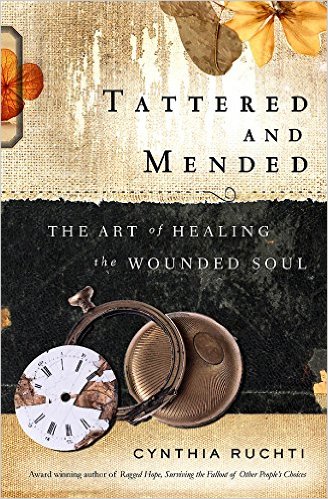
While researching artistic mending techniques for a recently released nonfiction book titled Tattered and Mended: The Art of Healing the Wounded Soul, I could feel the angle of my heart shifting.

Something has to break first in order for an artist to create.

Under the skilled hand of a master jeweler, gemstones in their raw form are chiseled and ground and intentionally shattered into smaller, workable pieces before they can grace an artistic ring or necklace.

GemologyOnline.com says, “Bruting grinds away the edges, providing the outline shape (for example, heart, oval or round) for the gem… Once the fully faceted diamond has been inspected and improved, it is boiled in hydrochloric and sulfuric acids to remove dust and oil." 

  • A stained glass artist uses bits and pieces, scraps and shards of colored glass. Sometimes the artist takes a full sheet of glass and intentionally breaks it to create the piece he or she needs when creating the masterpiece.
  • A painter breaks the seal on the fresh tube of pigment. 
  • A fiber artist twists the threads, or separates them, or punches a needle into fabric.
  • A potter starts by cutting or “wedging” the clay, then kneading it for as many as fifty strokes before throwing it onto the potter’s wheel.
  • A mosaic artist rejoices over finding broken pieces of porcelain, china, pottery, envisioning the art it can become.

 The deeper I look, the more convinced I am:

Broken pieces don’t spell the end of something, but the beginning.

The psalmist David said so, too. “A broken spirit is my sacrifice, God. You won’t despise a heart, God, that is broken and crushed” (Psalm 51:17 CEB).

Walk the halls of His gallery. What do you see? Portraits of uncommon courage. Displays of resilience that speak of God’s power to endure. Pictures of the reformed, reshaped, remolded, recovered, rehabbed, reclaimed, rebuilt, redeemed.

Where does that leave us when we scramble to collect the shards of a broken life? What hope can we draw from His Word and His character?

1. He invites us into the mending process. (Psalm 34:18; Psalm 147:3; Isaiah 57:15)

2. He can’t resist the broken. (Psalm 51:17)

3. We won’t always find the process comfortable. (I Peter 4:19)

4. What emerges when He’s finished will have an impact on others. (Job 23:10)

5. God doesn’t merely iron a temporary patch over a threadbare spot or sweep up shattered pieces and discard them. He sorts through them, handles them tenderly, and creates art. (Isaiah 61:3)

When you hear about—or experience—heart-shattering news, are you more likely to ask, “God, what are You doing?” or to assume, “He’s making art”?

Cynthia Ruchti is an award-winning author and frequently-requested speaker. She tells stories hemmed in hope through her novels, novellas, devotionals, nonfiction, and speaking events for women. You can connect with her at cynthiaruchti.com and learn more about her books, including the July 2015 release—Tattered and Mended: The Art of Healing the Wounded Soul.

Graphic adapted, Image courtesy of Feelart at FreeDigitalPhotos.net.