




Member of AWSA

  Info about AWSA


[Bios on Partners Page]

PARTNERS:

Lina AbuJamra

Sue Badeau

Dianne Barker

Twila Belk

Gail Bones

Harriet Bouchillon

Mary Carver

Pamela Christian

Lisa Copen

Erin Davis

Diane Dean

Deb DeArmond

Kelly DeChant

Danna Demetre

Melissa Edgington

Debbi Eggleston

Pat Ennis

Morgan Farr

Pam Farrel

Liz Cowen Furman

Gail Goolsby

Sheila Gregoire

Doreen Hanna

Holly Hanson

Becky Harling

Debbie Harris

Nali Hilderman

Cathy Horning

Kathy Howard

Mary James

Priscilla Jenson

Lane P. Jordan

Rebecca Jordan

Ellie Kay

Maria Keckler

Sylvia Lange

Debby Lennick

Peggy Leslie

Kathi Lipp

Kolleen Lucariello

Kathi Macias

Paula Marsteller

Melissa Mashburn

Dianne Matthews

Cindi McMenamin

Elaine W. Miller

Kathy Collard Miller

Lynn Mosher

Karen O'Connor

Yvonne Ortega

Arlene Pellicane

Ava Pennington

Laura Petherbridge

Gail Purath

Marcia Ramsland

Kaley Rhea

Rhonda Rhea

Vonda Rhodes

Cynthia Ruchti

Julie Sanders

Judy Scharfenberg

Deedra Scherm

Laurel Shaler

Joanie Shawhan

Stephanie Shott

Poppy Smith

Susan K. Stewart

Stacie Stoelting

Jill Swanson

Janet Thompson

Janice Thompson

Teri Thompson

Brittany Van Ryn

Elizabeth Van Tassel

Leslie Vernick

Laurie Wallin

Julie Watson

Joan C. Webb

Cherri Williamson

Kathy C. Willis

Debbie W. Wilson

Nancy DeMoss Wolgemuth

Jamie Wood

   and Founder:

   Dawn Wilson


Entries in Relationships (72)

Thursday
Jan192017

Have You Been Skimpy with Gratitude?

Dianne Barker is a super-practical woman of God who cares about relationships. In this Marriage UPGRADE, she offers practical wisdom for better spousal interaction (but the basic premise of expressing gratitude is true for all relationships).
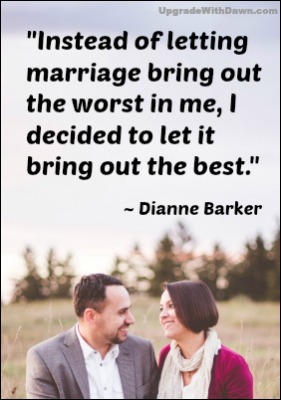
"Marriage can bring out the worst in us," Dianne says.

I (Dawn) don't think anyone will dispute that. While marriage has the potential to grow and bless us, it certainly does point out all the rough spots in our character. Dianne's post today is a good way to deal with some of those "worst in us" days.

Dianne continues . . . 

In younger days, when things didn’t go my way, I’d “have it out” with my husband—in my thoughts. I didn’t dare put my annoyance into words, but in my mind I gave him a hearty tongue-lashing. He had no idea.

And then I’d silently settle my ruffled feelings and sulk a while.

One day the Lord caught me sulking over a disappointed expectation and interrupted my pity party.

You could be praying about bigger things.

I’ve heard the stories.

  • Husband leaves a devoted wife for someone else.
  • Another wife struggles to stay with a husband addicted to pornography.
  • Huge challenges overwhelm the grieving widow.

Yes. I could be praying about bigger things.

I wasted a lot of life pouting over small irritations—wishing I could change this husband of mine. The Lord has a way of putting things in perspective.

Instead of letting marriage bring out the worst in me, I decided to let it bring out the best.

Two choices changed me from the inside out: prayer and praise. I learned to pray about what my husband isn’t, and praise him for what he is.

Grumbling about everything he does wrong isn’t beneficial. Praying—taking concerns to my Father—is a positive use of emotional energy wasted on anger and pouting, which never bring change.

I looked for reasons to praise my husband, express appreciation, and compliment him. I wasn’t sure he noticed until I overheard him say to a friend, “My wife has a gift of encouragement. She brags about everything I do!”

Why not thank him for carrying out the garbage, mowing the lawn, filling my gas tank, and changing the oil?

A heart overflowing with praise and gratitude to the Lord can’t help expressing gratefulness in other relationships.

Listen to this.

“Just as you received Christ Jesus the Lord, so go on living in him—in simple faith. Yes, be rooted in him and founded upon him, continually strengthened by the faith as you were taught it and your lives will overflow with joy and thankfulness” (Colossians 2:6-7, Phillips).

Marriage needs constant nourishment. Does your relationship suffer the tatters of neglect?

Like a soothing ointment on a raw wound, gratitude promotes healing.

Begin here:

  • List seven qualities about your spouse to praise God for daily (character qualities, talents, good deeds, spiritual commitment, love for the children, sacrificial work, financial contribution to the family).
  • Pray, thanking the Lord daily for each of those qualities.
  • Verbalize to your spouse at least one genuine compliment every day. “Honey, I really appreciate…” (a deed performed, wisdom shown, patience extended).
  • Express affection every day through words and touch. Say “I love you” and hug each morning before leaving for work. Say “I missed you” and hug each evening after work.
  • Find time to cuddle. If you’ve been ignoring each other, this may feel awkward. Do it anyway. God intended for us to enjoy marriage, not merely endure it.

Going overboard with gratitude will bring out the best in you!

Have you been skimpy with gratitude? If you're married, why not try these five steps to "overboard gratitude" today?

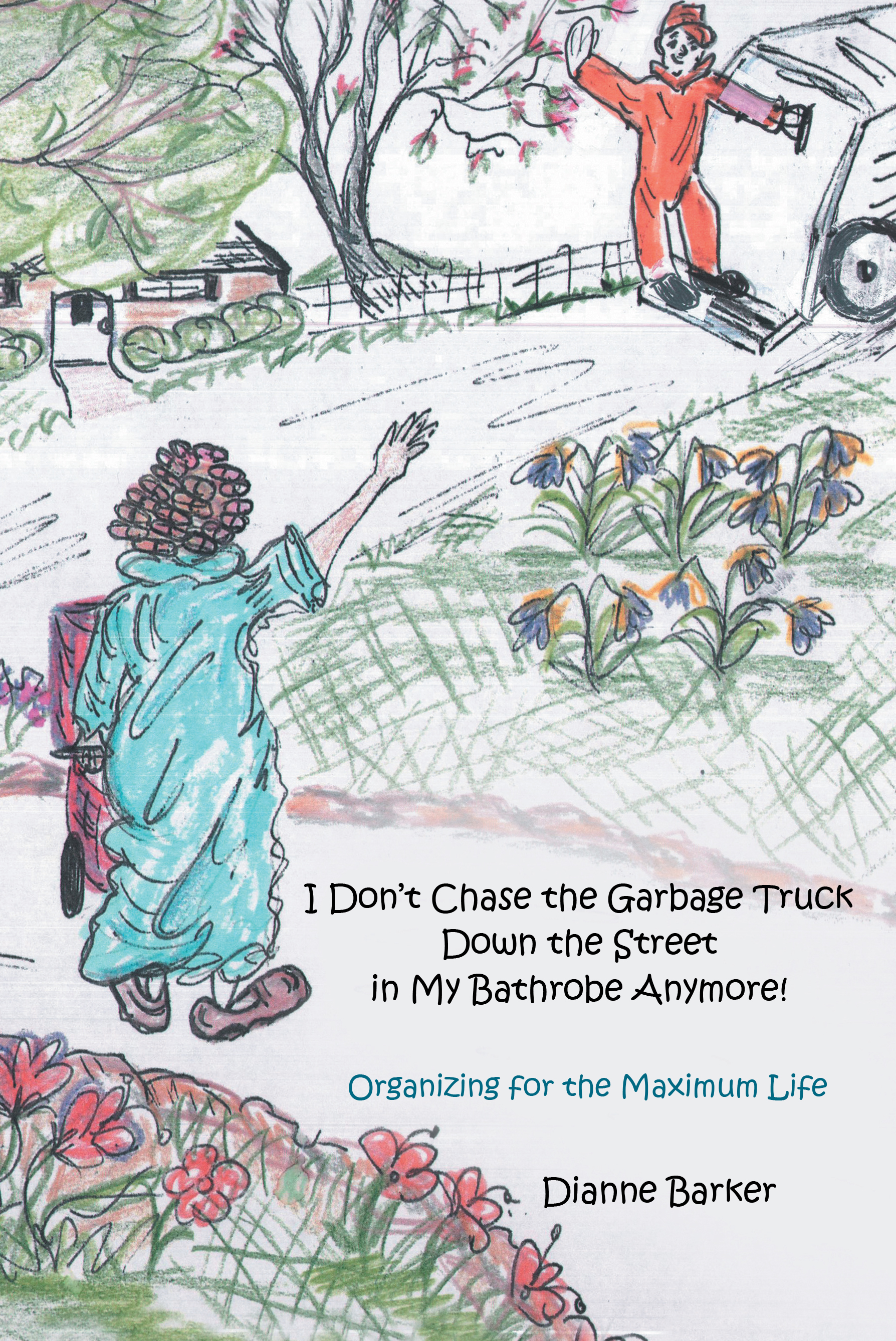
Dianne Barker is a speaker, radio host and author of 11 books, including the best-selling Twice Pardoned and award-winning I Don’t Chase the Garbage TruckDown the Street in My Bathrobe Anymore! Organizing for the Maximum Life. She’s a member of Advanced Writers and Speakers Association, Christian Authors Network, and Christian Women in Media. (Post adapted from Help! I’m Stuck and I Can’t Get Out! The Maximum Marriage Maintenance and Repair Kit, available soon at www.diannebarker.com.)
Graphic adapted, courtesy of Ben White, Morguefile.

Thursday
Dec012016

Building on the Memories

Cynthia Ruchti's novels and novellas brim with hope, and in this Christmas UPGRADE, she writes of the hope we can build into our lives as we "reclaim" the past for a brighter future.

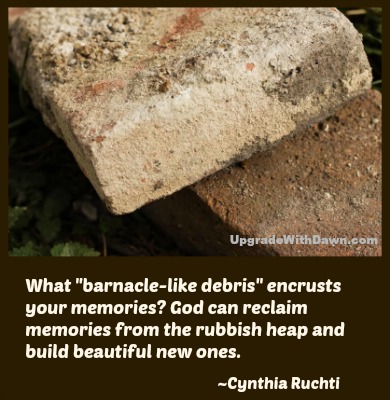
Cynthia asks, “How can we knock off the barnacle-like debris and use what once was ugly or hurtful to build new, God-honoring, family-preserving memories?”

This is one of the most beautiful concepts the Lord has taught me (Dawn) through the years, and Cynthia expresses it in a hope-filled way. Someday, the Lord will make all things new (Revelation 21:5), and we often see His hand of restoration at work today.

Cynthia continues . . .

He sat in the encroaching cold, the collar of his work coat turned against the wind, his right hand wrapped around the handle of an ancient pick, his left holding a brick encrusted with crumbling mortar. The brick was one of hundreds piled next to him.

By the end of the day, he’d cleaned a dozen bricks of barnacle-like debris. By the end of another day, the pile of unusable bricks shrank measurably as the stack of “now what?” grew.

Before they’d tumbled into a messy pile, the bricks had formed the walls of a storage shed on the man’s parents’ farm. When the man was a small boy, the storage shed held garden tools, his father’s grimy work bench, and dark memories of abuse the father had renamed punishment.

The boy had dropped an egg on the way from the chicken coop to the house. An endless round of wallops with his father’s leather strap.

The boy left his jacket at school. More welts.

The boy lingered too long at a friend’s house. The cost was a night alone in the locked shed—no lights, no food, no blanket.

As the barnacles of unkindness and cruelty fell away now with each tap of the pick, the memories crumbled, no longer holding power over him. He owned the house now. The brick storage shed had been torn down.

He was paving the walkway through the garden to the house with the bricks that had once represented pain.

When finished, the project drew tears, not because of the once solid memories, but because of the beauty of a firm, well-lit, soul-pleasing path.

That’s what restoration experts do—take the crumbling, useless, broken, tired, ugly, rotted elements of a home or a life and remake them to create either a better version of what once was, or something entirely new. Like walls of an emotional prison turned into a pathway to freedom.

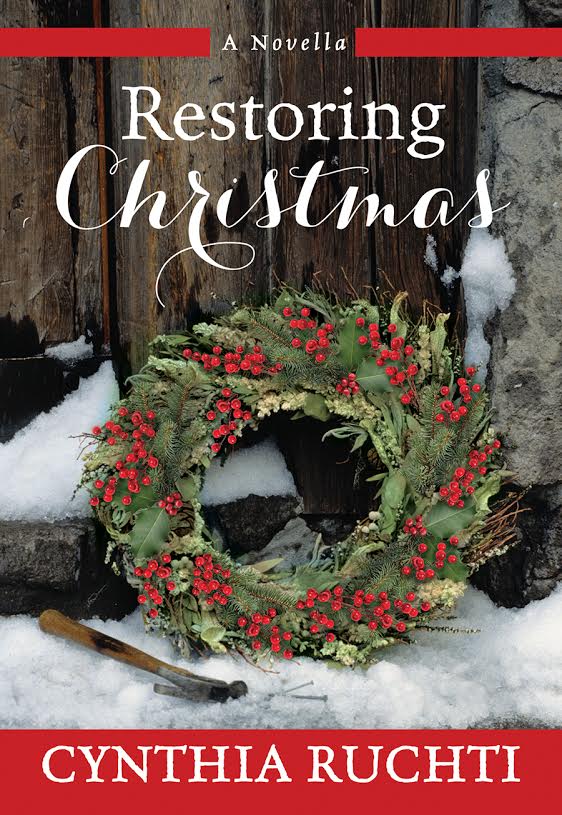
It wasn’t until I was well into writing Restoring Christmas—a book with the restoration of an old fieldstone farmhouse as its settingthat the full impact of the connection struck me.

Christmas and restoration. Synonymous in so many ways.

  • Jesus came to restore the relationship with God that hadn’t been possible since sin entered the world.
  • The gift of God’s Son restored hope for mankind.
  • Jesus coming in human form restored our faith in God’s indescribable, unfailing-no-matter-how-long-it-takes love.

Do some Christmas memories bite into your soul like a whipping strap bites into fragile skin?

An uncle refuses to come to the holiday celebration if his brother will be there.

A grandparent’s obvious inequality in gift-giving for a favored grandchild sends a wave of discomfort through the whole family—oldest to youngest—every year?

Christmas celebration has lost its luster in light of the medical crisis the family’s facing? The memories won’t be the same in the assisted living center that now substitutes for the family home that once served as the gathering spot?

Unforgiveness is an unwelcome guest at every holiday meal?

How can we knock off the barnacle-like debris and use what once was ugly or hurtful to build new, God-honoring, family-preserving memories?

  • In some instances, the only option is to let it go—the unfairness, the inequity, the resentment. Humanly impossible? Yes. But the Father sent the Son to be the restorer of relationships.
  • Old traditions that spotlight the pain of uncomfortable memories may have to be reworked to become something new. It’s not the same without Grandpa reading the Christmas story? What if the new tradition were hearing the story through the sweet voice of the youngest reader in the family? The Father sent the Son to give us a new story to tell.
  • Uncle Fred refuses to attend the family Christmas? Pray for restoration but pass the potatoes. Christmas isn’t a celebration of earth’s perfect families but of the Son who was sent to make restoration possible because anything of earth isn’t perfect.

What is an important but previously painful or uncomfortable Christmas memory that you can reclaim from the rubbish heap and watch God turn into this year’s restoration project for your family?

Cynthia Ruchti tells stories hemmed in Hope through her award-winning novels, novellas, devotionals, nonfiction, and through speaking events for women and writers. She and her husband live in the heart of Wisconsin, not far from their three children and five grandchildren. Her recent novel—Restoring Christmas—shows the parallel between a couple restoring a fieldstone farmhouse for a reticent homeowner and God’s restoration work on human hearts.  You can connect with her through cynthiaruchti.com or hemmedinhope.com.

Thursday
Nov102016

7 Steps to Resolve Conflict (Hint: It Takes Humility!)

Susan K. Stewart is a practical gal with a lot of wisdom. In this Relationships UPGRADE, she shares important, biblical steps to resolving relationship conflicts.

"'Not again. How many times can he preach on this subject? Who is it stirring up trouble now?' Those were my thoughts," Susan said, "when I read the sermon title: 'Resolution: The Matthew Solution.'"

Like Susan, I (Dawn) have been uncomfortable in church, wincing with the pinch of a convicting message and wishing the pastor would move on to a less painful topic. Or at least, preach it to someone else! It took me a long time to understand it was really the Spirit of God tugging at my own heart.

Susan continues . . .

A recent undercurrent of discontent infected our congregation. That is often a problem in groups of people We are, after all, sinful humans who happen to be saved by grace. Conflict among Christians should not be a surprise.

“How will he admonish us this week?”

I had developed a terrible attitude about the whole situation. I sat trying to be attentive for that grain of truth God had for me.

Somehow I missed it.

During the following week, God led me to the book of James. I focused on James 4:7-10.

My heart opened to what should have been a no brainer, clear steps to resolving conflict.

1. Submit to God

No matter the circumstances, submit to God. Ask for his wisdom to see the truth, not the colored viewpoint of humans.

Be willing to follow him, wherever it may lead.

2. Resist the devil

As we submit to God, we resist the devil. But the attacks will continue during the peacemaking process.

Satan wants to convince us that we aren’t at fault. He says following God’s way is troublesome, a lot of work, and a hindrance to the outcome we want. As humans, what we want is peace at all cost and to look like the peacemaker.

3. Draw near to God

The more we resist the devil, the closer we move to God. As we move closer thim, the better able we can resist the devil.

The closer we are to God, the more we will be able to remove our own desires and submit to God’s.

4. Cleanse your hands

Here’s where the rubber starts to screech along the road.

What? Me, the sinner? We’ve become ingrained with the truth in Matthew 18: go to the one who has sinned against you. Instead when there’s a clash, we should be looking at our own sin.

“First take the log out of your own eye” (Matthew 7:5 NASB). We need to face our own sin before we confront anyone else’s.

5. Purify your heart

Is the goal of conflict resolution to make everyone happy? Or is it reconciliation with God?

To approach a solution to the friction, our own hearts need to be clean. This is done by seeking to please God, not other people.

Not everyone will be happy, but God will be delighted.

6. Be miserable and mourn and weep

Sin is the root of the strife and we should be saddened and repentant.

As we submit to God’s authority and purify our hearts, we come to realize how destructive our own sin is in the conflict.

7. Humble yourself

Humility isn’t weakness; it is the opposite of pride.

How often is pride the sin at the heart of discord? Humility is the admission we can do nothing on our own.

When pride takes hold, we think we have the solution to any problem. But only God is the true peacemaker.

Don’t worry; you’ll have an opportunity to put these steps into practice.

The next time conflict resolution is the topic of a sermon, article or conversation, remember James’ steps to peacemaking.

Resolve the strife in yourself, and then you will be prepared to help others.

Is there a conflict in your life? How will you follow James’s steps to resolve it?

Susan K. Stewart—when she’s not tending chickens and peacocks—teaches, writes and edits non-fiction. Her passion is to inspire readers with practical, real-world solutions. Susan's books include Science in the Kitchen, Preschool: At What Cost? and the award-winning Formatting e-Books for Writers. Learn more about Susan at www.practicalinspirations.com

Thursday
Oct132016

Prioritizing People: How to Upgrade Your Decisions

Author and international speaker Pam Farrel always seeks to breathe life into relationships, and in this Relationship UPGRADE, she focuses on the sometimes tough subject of "who should get my time"?

"Good decisions," Pam says, "will protect and provide for those who might not be able to, or yet know how to, protect themselves"

I (Dawn) know women struggle with prioritizing the people in their lives. However, none of us has unlimited time, energy or focus. As my friend Pam says, "The reality is, we must learn to see people and how we spend our time with and for people from a more heavenly point of view."

Pam continues . . .

Often women feel frozen when trying to decide on just how to prioritize people. However, even Jesus had to make choices on how He would spend His time and with whom.

Here are two of the questions I ask when trying to decide people-time priorities:

1. Who has earned more right to my time?

Some people truly deserve to be prioritized. For example, I will always answer my cell and quickly return a call to my mother, or rearrange my schedule if she is in need of my help. I do this because she gave birth to me, then gave of herself to raise me into the leader I am today. (Believe me, with my strong will, she had her work cut out for her!)

When I said, “I do” to my husband, God asked me to become a quality “helpmeet” to him.

Also all of my sons, their wives, and my grandkids deserve my time, because God gave them to our family as a gift.

My siblings, grandparents, in-laws, those in my extended family may also rotate in my schedule if they have a pressing need or issue that my skills set can help with.

In addition, if I make a commitment to a client (or boss), a disciple or a mentee, I do everything in my power to keep promises made.  

Most of us understand this concept in principle—but what happens when several of these people —or others—all seem to need us all at the same time? 

At that moment, I ask:  

2. Who is "the least of these"?

Jesus used this principle in a parable:

"The King will reply, 'Truly I tell you, whatever you did for one of the least of these brothers and sisters of mine, you did for me'" (Matthew 25:40 NIV).

In your situation, ask, “Who needs protected or provided for most?”  

“The least of these” are the very smallest or least of status. Jesus said how we treat those who we cannot gain from—and may not be able to protect or provide for themselves—is a reflection of how we are treating Jesus.

In a family setting “least of these” might be:

A CHILD

If you are a parent, every decision you make, know that your children are your “least of these”. So ask:

  • “How will this impact the kids?”
  •  “What choice do I need to make to give the best long range outcome for the kids?”
  •  “Who do I want my child to be as an adult? What choice here will get them there?”

A PARENT

The least of these does not always mean a child focus. For example, we went from directing and caring for our sons, and then a few years later, it was obvious Bill’s aging parents needed to become a high priority. Because their health continued to decline, we put our home up for sale to move nearer to aid them. 

A FAMILY MEMBER or FRIEND

God might move one of the relationships listed under the first question above to the front burner of your life if something catastrophic hits: a death, an illness, a financial collapse, etc.

These are more often a temporary shift of time, energy and focus given until the storm has passed.

YOU!

When you fly on a plane, the flight attendant always says, “In case of an emergency, put the oxygen mask on yourself first, then on the person you are traveling with”.

To care for “the least of these” means we also have to care for ourselves, so we can care for others!

Today, who is your “least of these”?  

Pam Farrel is the author of 45 books, an international speaker, and relationship expert who seeks to breathe life into people’s most vital relationships through the ministry she runs with her husband, Love-Wise. Today’s blog is adapted from her newest book, 7 Simple Skills for Every Woman: Success At Keeping It All Together.

Tuesday
Oct112016

10 Ways to Foster Gracious Speech

Kathy Howard, who sometimes calls herself a "confused southerner," is not at all confused about the truth of scripture. In this Communication UPGRADE, she encourages us to use our words wisely, with gracious speech.

“Our words have the power to build up or tear down," Kathy says, "but gracious speech has been an area of struggle for me.”

I (Dawn) have never had a serious problem with using words to tear other down, but it took me a while to learn how to effectively use words to encourage others. I'm glad Kathy addresses both issues!

Kathy continues . . .

Years ago, when our young family lived in Wyoming, my parents regularly came all the way from Louisiana to visit us. Just before one such visit, we purchased a dining table and chairs for a long-empty breakfast area. I couldn’t wait to show off the new furniture.

The first time we gathered around the table, Mom pulled out her chair and sat. As she scooted forward, a leg of the chair caught in the groove between two tiles. The leg snapped off, the chair tilted, and my mother hit the floor. HARD!

My immediate reaction was not words of grace.

“You broke my chair!” is what came out of my mouth.

Not, “Are you alright?!” or “Let me help you!”

My mother looked so hurt. Not physically; the tumble wasn’t bad. But I terribly hurt her feelings.

My quick words revealed what was in my heart – I cared far too much about material things. My first thought had been for the chair, not my mother. And my thoughtless words wounded her.

The apostle Paul knew our words have the power to build up or tear down. In his letter to the Christians in Ephesus, he tells them – and us – exactly what effect our speech should and should not have on others.

"Let no corrupt communication proceed out of your mouth, but that which is good to the use of edifying, that it may minister grace unto the hearers" (Ephesians 4:29, KJV).

First, our speech should not “corrupt.”

Far more than curse words, corrupt speech is graceless speech.

It tears down, deflates. Whenever we speak corrupt words to our spouse, our child, our coworker, or friend, they deflate like a beach ball full of holes.

Any words not wholesome or beneficial tear them down emotionally and spiritually. Little by little the air goes out. Sadly, I’ve seen my own words have that effect on other people.

Second, our speech should “benefit” or “minister grace” to others.

Like air blown into a deflated beach ball, good and edifying words will encourage and build up an individual, helping them to reach their full potential in Christ.

Even when we long for our words to give grace to others, sometimes things break down between our desire and the words that flow out of our mouths.

Sadly, our words will betray us, revealing the junk we have hidden in our hearts. Things like insecurity, hurt, unresolved anger, selfishness and pride produce words that wound, tear down and corrupt.

Would you like your words to consistently encourage, build up, and give grace to others? Here are ten things we can do to foster this “gracious” overflow:

  1. Regularly reflect on the unbounded grace God has lavished on us.
  2. Remember God will hold us accountable for every word we speak (Matthew 12:36).
  3. Constantly check our hearts for sinful attitudes and motivations. (See Matthew12:34-36.)
  4. Ask God to heal old hurts, soothe anger, and humble pride.
  5. Refuse to use "corrupt" speech – any words that wound, discourage, or tear down.
  6. Commit to using "good" words - kind and gracious words that build up and encourage.
  7. Find something positive with which to begin and end every conversation.
  8. Don't waste time talking about things that can't be changed.
  9. Focus on the other person. Ask questions about them and their feelings.
  10. Exercise self-control. Sometimes the most gracious thing to say is nothing.

With God’s grace flowing through us, our words can be tools of grace God uses to build up, encourage, and edify.

When was the last time your noticed the power of your words to either wound of give grace? What was the result?

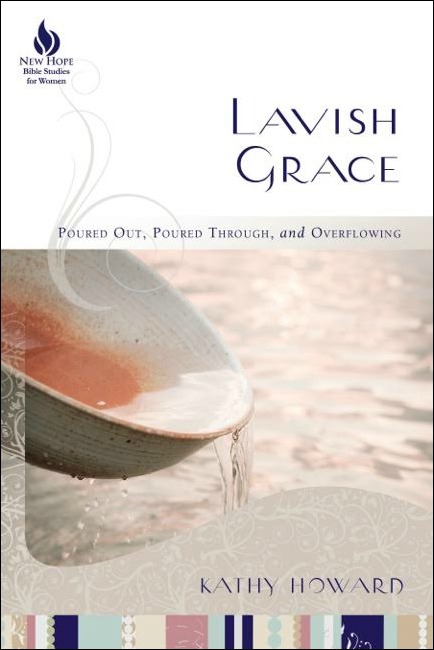
Kathy Howard helps women live an unshakeable faith for life no matter the circumstances. This post is adapted from her new Bible study Lavish Grace: Poured Out, Poured Through, and Overflowing. Lavish Grace is a 9-week journey with the apostle Paul that helps readers discover God’s abundant grace for their daily lives and relationships. You can find out more about Kathy and her speaking and writing, or find free resources at her website

Heart graphic is adapted, courtesy of Morguefile.